Article
Amazon Prime Day 2026: Pre & Post Event Strategies for Sellers
Prime Day planning typically starts ramping up right after Amazon’s Big Spring Sale in March, are there are many decisions that need to be considered months in advance to guarantee a successful event. To navigate the complexities of Amazon Prime Day participation, like inventory forecasting and advertising promotions, we wrote this guide to help sellers start preparing now.
Estimated Dates and Timeline
Will Prime Day 2026 be in June or July?
We know Prime Day is happening, as it does every year, but there are always rumors of whether it will fall in June or July. Although it has typically fallen in July during years’ past, this year there are rumors swirling that it may fall in June. With this being said, we highly recommend planning for the June timeline just in case. If Prime Day 2026 does happen in June, this will push all the inventory prep & deal submission timelines up about four weeks. This is definitely a case where it’s better for your brand to be safe than sorry.
How long will Prime Day 2026 last?
Aside from the specific month that Prime Day will occur in, there are also rumors swirling around the length of the event. Prime Day used to last two days, but last year Amazon made it twice as long (benefiting from twice as much ad spend). This year, we expect it will probably be a 4-day event again.
General Timeline
Here are key estimated deadlines and milestones to keep in mind when planning for Prime Day 2026:
- Early to Mid-April: Review FBA Storage Capacity. This is critical for inventory forecasting prep.
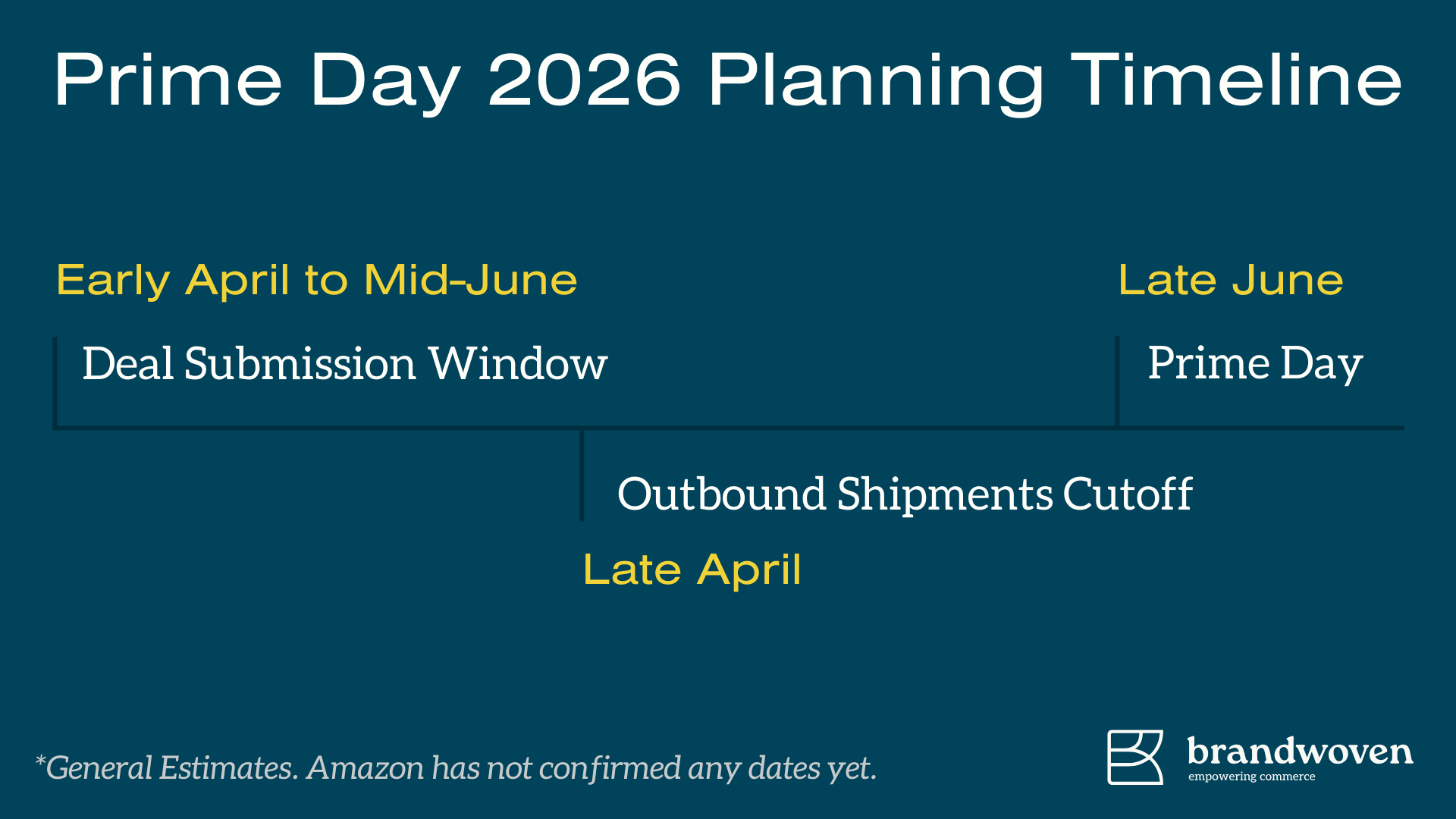
- Early April to Mid-June: Deal Submissions Window. Be ready for this window to open around the end of March or early April.
- Late April: Outbound Shipments Cutoff. Amazon accepts deal submissions up to the event, but brands must ship inventory by this time in order for that inventory to actually support the event.
- Late April to Early May: Inbound Arrival Cutoff (Minimal split).
- Late April to Mid-May: Inbound Arrival Cutoff (Optimized split).
- Late May: Likely Announcement Date.
- Late June: Estimated Prime Day Event.
Please note that Amazon has not yet confirmed any official dates, and may not do so until the end of May. Sellers should utilize this timeline as a general estimate and guideline to help plan for Amazon Prime Day effectively.
Considerations of Participation
Before diving into the logistics prep needed for Prime Day, a brand must first decide whether they are even participating. Prime Day participation should be based on your budget and seasonality.
If you are participating, this doesn’t mean that you need to run 20% off discounts across your entire catalog. Select products to promote during Amazon Prime Day based on how much attention they typically get (e.g. top sellers) or new products you are trying to push awareness to.
Multi-Marketplace Promotions
Brands need to align on what they are doing on other marketplaces, such as Walmart. Walmart and Target typically run their own competing retail sales events around the exact same time as Prime Day. Brands with products on multiple marketplaces need to carefully consider how participating in these simultaneous events affects their overall budget, promotional strategy, and pricing discounts.
This coordination ties directly into the issue of deal parity. You must avoid deal parity between Amazon, any other marketplaces you sell on, and your D2C site. While you want to drive traffic to whatever platform is most likely to generate a sale, running the exact same promotional discounts across multiple platforms (and pushing ad dollars to multiple efforts) can actually dilute the efficacy of your promotions. For example, if a customer can get the exact same deal from your D2C site, you are essentially paying twice as much to get their attention, but only getting one sale out of your investment.

Logistics Prep Needed
If you’re participating in Prime Day, preparing the right amount of product needs to be done well in advance. At Brandwoven, we use 12-month rolling forecasts, constantly considering these tentpole events to ensure accurate inventory prep.
- Focus on Top Sellers: Typically, brands run their strongest Amazon Prime Day deals on their top sellers, with supporting deals on secondary products. Focus on top-driving products and spend the bulk of your time here, as this is what will move the needle the most.
- Plan for FBA Injections: As we get closer to the event, we can factor in more concise information to improve the accuracy of our forecasts. While the deal window opened around the end of March last year, the timeline might look different this year depending on whether the event falls in June or July. Once the deal window actually opens, we get our first filter of what products are eligible for Prime Day deals. This allows teams to quickly decide what promotions to run, putting us in a good spot to plan exactly when we need to do our injections (FBA shipments) and for what specific quantities. When sending the actual units to FBA warehouses, you need to ensure Amazon has enough product to support the duration of the event and that this same quantity aligns with your sales goals.
- Navigate Lightning Deals: You can (and should) sign up for Lightning Deals early, but be aware that you won’t know when a deal is actually going to run until the week before the event. You still have to prep and send inventory beforehand to plan supply around those deals running.
Ads & Promotional Strategy for Amazon Prime Day
When it comes to ads, ensure you are aligned with the products you want to double down on, especially those with promotions. What doesn’t work is trying to advertise everything in the catalog; being laser focused works best.
The most important piece of your Prime Day advertising strategy is aligning on your metric north star: How do we define whether the event was a success?
Ultimately, your strategy comes down to your brand’s advertising goals on Amazon. While increasing sales is the most common goal, your specific targets should reflect where you currently stand in the market. If you are a more established brand, your primary focus might be to grow your share of voice. You may also want to improve organic rank, expose your brand to new consumers (new-to-brand), or use DSP to increase traffic and AMC to measure branded search lift, and increase overall brand awareness.
During Prime Day, your strategy shouldn’t focus solely on ROAS. The surge in shopper demand creates an opportunity to increase keyword share of voice and accelerate sales velocity on key products, which can help improve organic ranking over time.
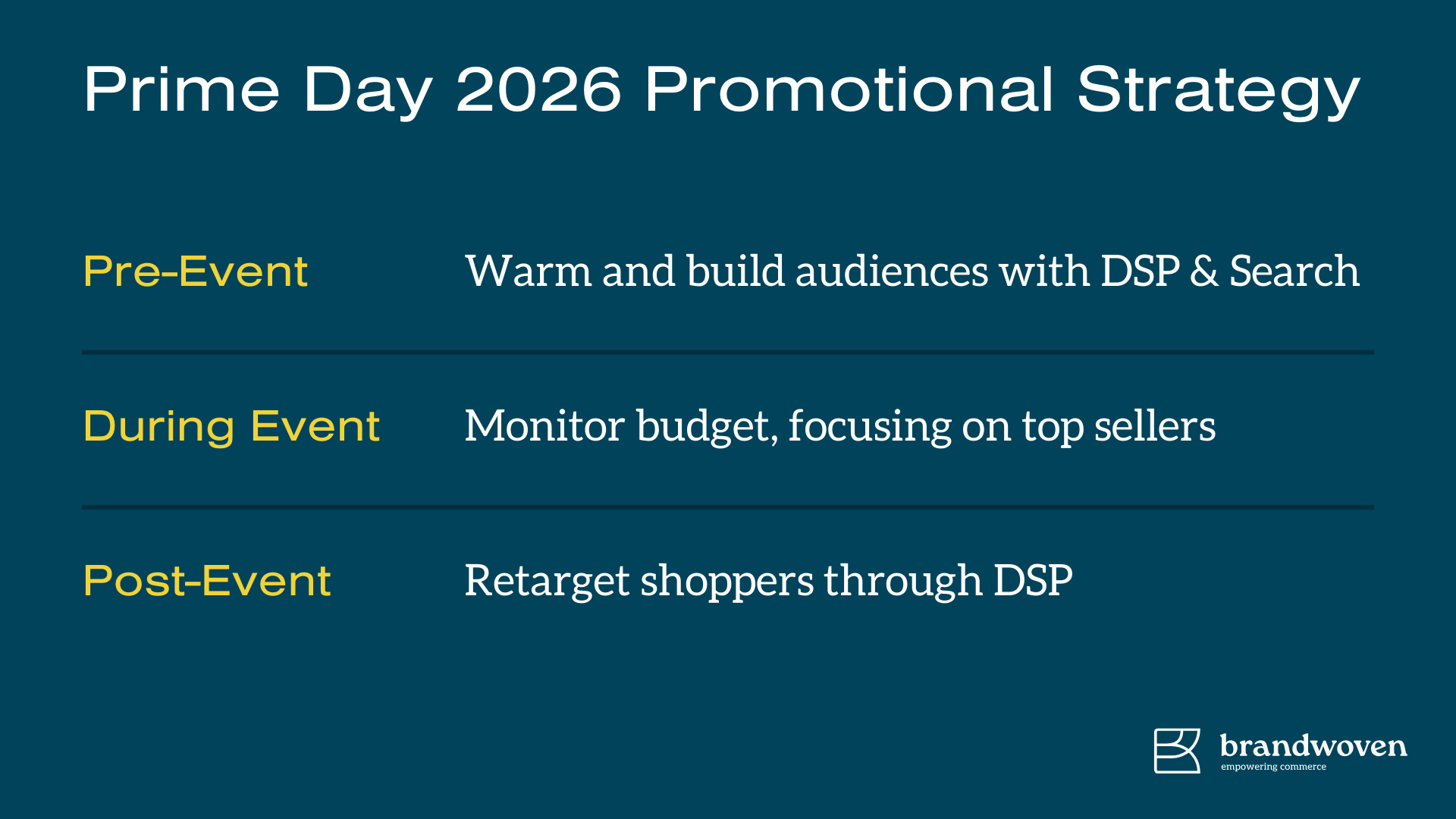
When deciding on your total budget for the event, there is no standard baseline percentage or number; the amount needed heavily depends on your catalog size and the number of promos you will run. However, we do recommend distributing your budget effectively across a three-phase approach:
Phase 1: Pre-Prime Day (Priming the Pump)
- Timing: 2-3 weeks before the event.
- Budget: Usually ~20% of your budget is used during this time. CPCs get very expensive pre-Prime Day because a lot of people are shopping around and adding to cart, but not converting.
- Strategy: You must ensure campaigns are set up and running ahead of time. This is crucial to get your brand in front of more consumers while they are actively browsing and building their carts before the event.
- Additionally, leverage Amazon DSP during this phase to warm audiences and set up retargeting for during and after the event.
- Off-Amazon Coordination: This pre-Prime Day phase is also the time to align on off-Amazon strategies to generate attention. For example, a brand may lean heavily into promotion on social media, like TikTok, a week or so before Prime Day to build up early interest. This coordinated approach helps push customers to Amazon during Prime Day and creates a massive halo effect, typically resulting in bigger sales lifts for brands once the actual event kicks off.
Phase 2: Budget Management During the Event
- Budget: ~50%-60% of your budget will likely be used during Prime Day. It is absolutely critical to ensure you have enough money to keep the lights on and budgets lasting throughout the entire event.
- Because CPCs always increase year-over-year during these events, meticulous budget management is required to weather the peaks and valleys of demand, traffic, and sales while remaining visible. It is important to note that these extreme peaks and dips will be especially common—and potentially surprising—if your brand is newer to Amazon. Newer brands typically haven’t had exposure to these intense fluctuations or the reality that advertising will be significantly more expensive during Prime Day than other times of the year, making strict budget management and level-setting expectations all the more critical.
- With the event likely spanning four days again this year, you must have enough budget spread out across that time so that your campaigns do not go dark prematurely.
- Strategy: Push ad dollars heavily towards your discounted items. Focus on Top of Search placements to maximize visibility on your most important keywords and ensure your priority products capture the highest intent traffic.
Phase 3: Post-Amazon Prime Day Retargeting with DSP
- Timing: 2-3 weeks after the event.
- Budget: Save ~20%-30% of your budget for post-Amazon Prime Day retargeting through DSP, AMC custom audiences, and other promotion types. Making sure you have a lot of budget to re-engage after Prime Day is essential.
- Strategy: Re-engage consumers who went to a product detail page but didn’t purchase, or cart abandoners.
- A popular tactic during this phase is to run a softer promo (e.g., a 5% off coupon) for consumers who showed signals of interest but didn’t convert. While not as aggressive as your main Prime Day discount, it is still enticing enough to push them toward a final purchase.
- You can also execute this by building out AMC audiences to target these specific shoppers and deploy them through both search and DSP campaigns.
- Brands can additionally leverage Brand Tailored Promotions to serve targeted discounts based on specific customer segmenting and engagement.
Conclusion
Prime Day is an incredible opportunity to grow your brand, but success requires meticulous forecasting, strategic advertising campaigns, and a disciplined approach leading up to, during, and after the event.
Ultimately, a winning Amazon Prime Day strategy doesn’t happen in a vacuum. It requires coordinating your off-Amazon efforts to avoid D2C deal parity, pacing your budget to weather the extreme peaks and valleys of the event, and—most importantly—aligning early on your goals. By defining what a successful event looks like when the deal window opens, you can ensure your brand is positioned to not only maximize visibility during the rush, but capitalize on the crucial post-Prime Day halo.