Learn the Amazon Platform’s Language and Stop Getting Lost in Translation
Comprehensive List
Abbreviations From Across Amazon
Acronym with Definitions
Visuals Guiding You to The Right Place


Download A Copy
Complete the form to gain access to our list of 100+ Amazon acronyms.
The Amazon Seller's Guide to Essential Amazon Marketplace Acronyms
Common Terms
As you dig into the Amazon ecosystem, you’ll likely run into these basic terms inside your account backend or in conversations with other Amazon sellers and experts. Because of this, it’s important to know what each of these common terms mean and which phrases or programs apply to your business.
| TERM | WHAT IT STANDS FOR |
|---|---|
| ABA | Amazon Business Advisory |
| A paid account management service provided by Amazon available to sellers with an active professional selling account. | |
| AMZ or AMZN | Amazon |
| Shortened name for Amazon. Generally used for Amazon.com but could also be the whole company or the stock symbol. | |
| API | Application Programming Interface |
| A coding interface for connecting two platforms to one another. | |
| EAN | European Article Number |
| A standardized 13-digit barcode system used for identifying products in the global supply chain. | |
| FBA | Fulfilled by Amazon |
| Products that are shipped by Amazon as the warehouse & shipping provider for brands via Seller Central (SC). | |
| FBM | Fulfilled By Merchant |
| Products that are shipped directly to consumers by the Merchant via Seller Central (SC). | |
| Marketplaces | |
| The different regions in which Amazon allows brands to sell their product through (eg: USA, U.K., Canada, Mexico, Belgium, Germany, etc.) | |
| Merchant | |
| A brand utilizing a Seller Central (SC) and Fulfilled by Merchant (FBM) model who handles shipping product directly to consumers rather than going through Amazon warehousing and distribution to do so. | |
| MWS | Marketplace Web Services |
| An Application Programming Interface (API) tool that allows 3rd Party Sellers (3P) to interact with Amazon services programmatically. | |
| MYCE | Manage Your Customer Engagement |
| A tool that allows Amazon sellers to email customers and followers. | |
| NCX | Negative Customer Experience |
| An Amazon metric that measures the percentage of a seller’s orders that result in a negative experience for customers. | |
| OA | Online Arbitrage |
| A legal business model that involves buying products from an online retailer at a low price and reselling them on a marketplace like Amazon at a higher price point to turn a profit. | |
| OTP | One Time Password |
| A unique password to be only used once. An extra layer of security that Amazon provides upon account log-in, prompting a code to be sent to the email address on file. | |
| PDP | Product Detail Page |
| The listing page consists of the product images, description, reviews, and buy box; the page in which consumers directly convert. | |
| PO | Purchase Order |
| Ordered placed by Amazon to a brand via Vendor Central (VC). Amazon handles shipping to consumers. | |
| POC | Point Of Contact |
| An individual or a team responsible for managing communication between two or more parties. | |
| Q1 | Quarter 1 |
| The first of four quarters of the year; January through March. | |
| Q2 | Quarter 2 |
| The second of four quarters of the year; April through June. | |
| Q3 | Quarter 3 |
| The third of four quarters of the year; July through September. | |
| Q4 | Quarter 4 |
| The fourth of four quarters of the year; October through December. | |
| RA | Retail Arbitrage |
| Similar to Online Arbitrage (OA); a legal business model that involves buying products from a brick-and-mortar retailer at a low price and reselling them on a marketplace like Amazon at a higher price point to turn a profit. | |
| ROI | Return On Investment |
| A metric that quantifies profitability; a percentage of profit relative to an investment made. | |
| RPB | Repeat Purchase Behavior |
| The pattern of customers purchasing the same product multiple times. | |
| SAS | Strategic Account Services |
| An Amazon program that assigns an account manager to a selling account. | |
| SC | Seller Central |
| One of two Amazon platforms where brands can manage products and reach the Amazon customer base through a direct-to-consumer model. Brands utilizing this platform are referred to as “sellers” whereas brands utilizing Vendor Central (VC) are referred to as “vendors”. | |
| SFP | Seller Fulfilled Prime |
| A program offered to Amazon sellers that offers Prime badging on Fulfilled By Merchant (FBM) orders. | |
| SOP | Standard Operating Procedure |
| Formal documentation of a company’s internal processes. | |
| USPTO | United States Patent & Trademark Office |
| Federal agency that grants patents and registers trademarks. | |
| VC | Vendor Central |
| The second of the two Amazon platforms where brands sell and send products to Amazon via Purchase Orders (PO). From there, Amazon manages shipping products to consumers. Brands utilizing this platform are referred to as “vendors” whereas brands utilizing Seller Central (SC) are referred to as “sellers”. | |
| VPN | Virtual Private Network |
| Technology providing a secure and encrypted internet connection. | |
| 1P | First Party Sellers |
| A brand on the Vendor Central (VC) platform qualifies as a First Party Seller. Invite only program. | |
| 3P | 3rd Party Sellers |
| Any brand on the Seller Central (SC) platform qualifies as a 3rd Party Seller, so Fulfilled by Amazon (FBA) and Fulfilled by Merchant (FBM) models are considered 3rd Party Sellers. | |
Analytical Terms
As your Amazon business expands, you’ll likely run into the following terms and metrics that help sellers to evaluate their account growth over a specified amount of time. These terms are especially common in annual reporting that businesses conduct regularly to ensure healthy and sustainable account growth.
| TERM | WHAT IT STANDS FOR |
|---|---|
| AOV | Average Order Value |
| Average sales per order converted, represented as a dollar amount. Can show purchasing preferences of shoppers and reveal opportunities for bundles via multi-item purchases. In the context of advertising, note that it is beholden to the products being advertised by your campaign. Calculated by Sales / Orders. | |
| ARPI | Average Repeat Purchase Interval |
| The average time period between customer’s purchases. The shorter, the better (more frequent purchases). | |
| BA | Brand Analytics |
| An Amazon tool available to brands enrolled in Brand Registry. | |
| BSR | Best Sellers Rank |
| An Amazon metric that measures how well a product is selling compared to others in its category. A product may have multiple BSRs if active in more than 1 category. The higher the rank, the better (indicating stronger product sales). | |
| COA | Cost per Action |
| Advertising metric that measures the cost per user action, helping advertisers improve campaign effectiveness and Return on Investment (ROI). | |
| CLR | Category Listings Report |
| A breakdown of a brand’s entire Amazon catalog by listing, giving brands a complete overview of listing information. | |
| CTR | Click Through Rate |
| The rate at which shoppers click on a given product page or ad, represented as a percentage. Shows the effectiveness of targeting a given audience or keyword. Calculated by Clicks / Impressions. | |
| CVR | Conversion Rate |
| The rate at which shoppers make a purchase after clicking a given product page or ad, represented as a percentage. Calculated by Orders / Clicks | |
| ETC | Estimated Time of Completion |
| The typical amount of time required to do something; can be helpful for fulfillment planning, etc. | |
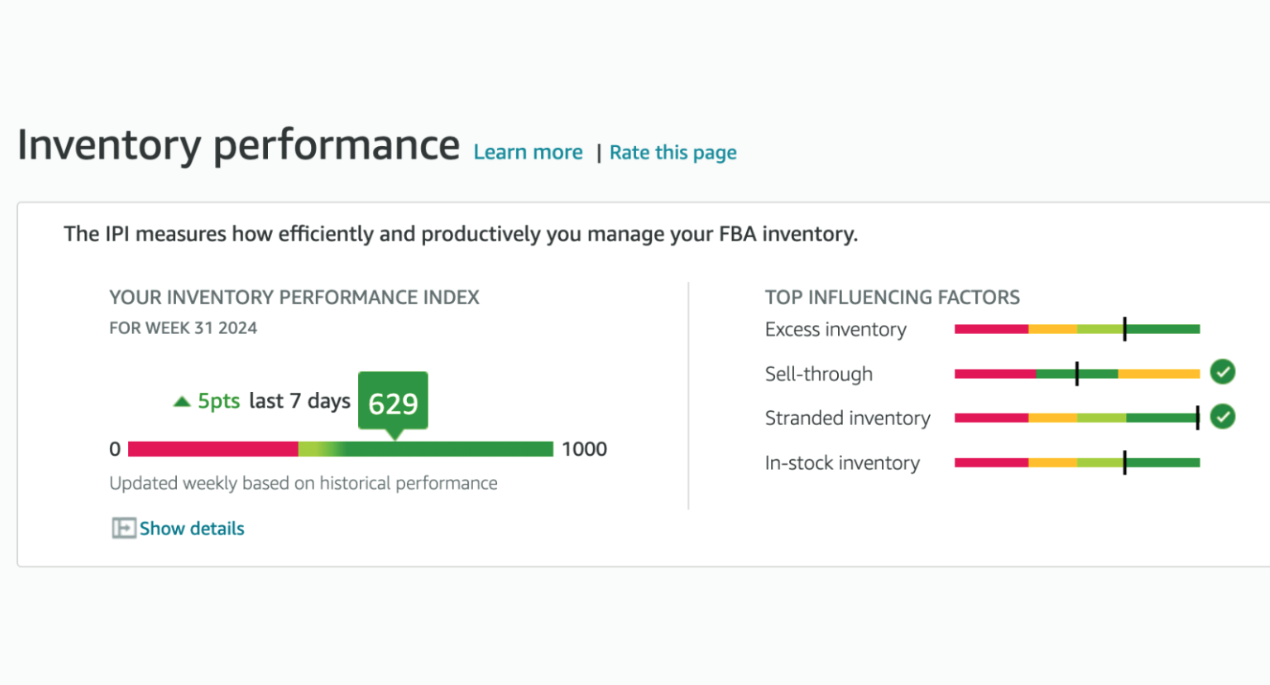
| IPI | Inventory Performance Index |
| Amazon metric measuring how well brands manage their inventory. Scores range from 0-1,000; the higher, the better. | |
| KPI | Key Performance Indicator |
| Refers to essential account metrics. Amazon sellers may consider the following as Key Performance Indicators (KPIs): inventory performance index (IPI), conversion rate (CVR), average order value (AOV), return on investment (ROI), and revenue. | |
| MoM | Month over Month |
| The measurement of performance from one month to the next. | |
| ODR | Order Defect Rate |
| Product orders that result in a negative customer experience, represented as a percentage. | |
| RPR | Repeat Purchase Rate |
| The amount of customers that made multiple purchases from the same brand, represented as a percentage. | |
| TS | Total Sales |
| The amount of gross revenue a brand makes, represented as a dollar figure. | |
| YoY | Year over Year |
| The measurement of performance from one year to the next. | |
Marketing Terms
Most brands will need to invest in advertising in order to grow awareness and sales on competitive platforms like Amazon. When creating and analyzing marketing campaigns, the following terms are those you’ll likely run into.
| TERM | WHAT IT STANDS FOR |
|---|---|
| A9 | Amazon’s Algorithm |
| The engine that powers Amazon’s product search pages and rankings. | |
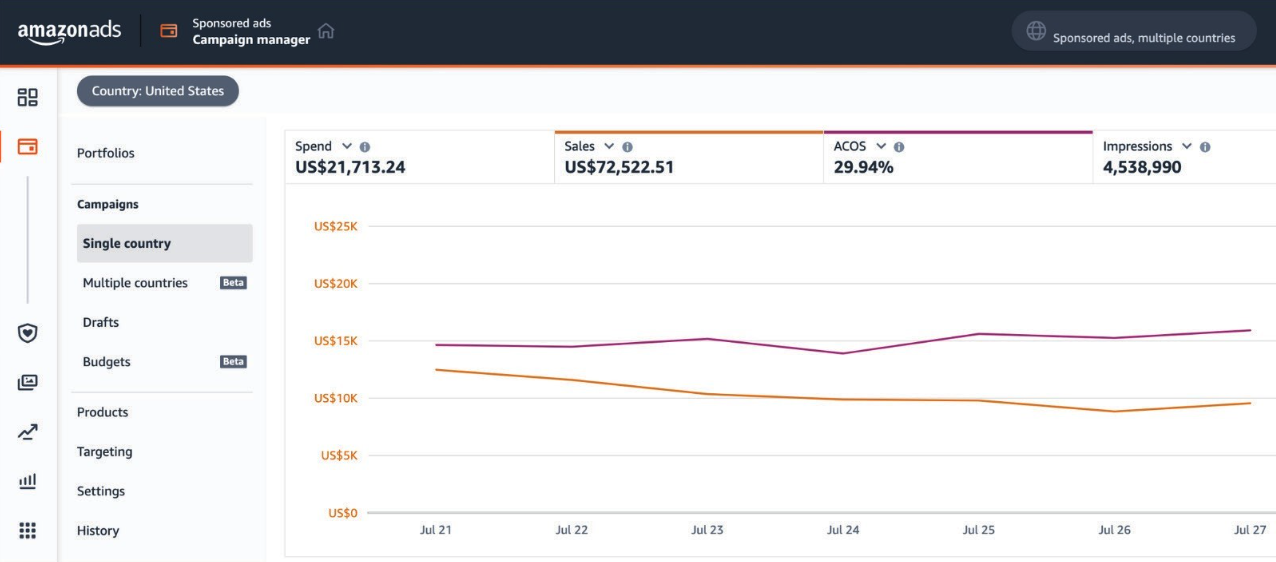
| ACoS | Advertising Cost of Sale |
| Ad Spend as an average of Ad Sales, represented as a percentage. Calculated by Ad Spend / Ad Sales. | |
| ACPC | Average Cost Per Click |
| The average cost each time a user clicks on an ad, represented as a dollar amount. Calculated by Cost / Clicks. | |
| CPA | Cost Per Acquisition |
| Average ad spend needed to convert a sale, represented as a dollar amount. Shows the cost of conversions for a given target term or within a specific market. Calculated by Ad Spend / Orders. | |
| CPC | Cost Per Click |
| The average cost of clicks generated by an ad, represented as a dollar amount. Calculated by Ad Spend / Clicks. | |
| DSP | Demand Side Platform |
| Automated advertising software that leverages first-party data to enable precise audience targeting based on demographics, shopping behavior, etc. Allows brands to reach audiences beyond Amazon. | |
| HBS | Halo Brand Sales |
| Sales attributed to a campaign via a different product than the one advertised in the clicked ad. Can help uncover shopping patterns of buyers and explain discrepancies between Ad Sales and Total Sales. Requires a 3rd party platform to calculate. | |
| MKL | Master Keyword List |
| A collection of keywords that are relevant to a brand’s catalog and can be targeted for an increased organic rank or paid advertising campaigns. | |
| PPC | Pay Per Click |
| A type of ad where the advertiser only pays once a user has clicked on the ad. Includes Sponsored Products, Sponsored Brand, and Sponsored Display ad types. | |
| ROAS | Return On Advertising Spend |
| Ad Sales generated per dollar of Ad Spend, represented as a dollar amount. Calculated by Ad Sales / Ad Spend. | |
| SB | Sponsored Brands |
| A type of pay per click (PPC) marketing that features a brand’s logo and products on the Amazon search results page. | |
| SD | Sponsored Display |
| A type of pay per click (PPC) marketing that allows brands to reach audiences both on and off Amazon. | |
| SEO | Search Engine Optimization |
| A strategy that includes improving, or optimizing, product listings to boost the page’s organic visibility and ranking on the Amazon search results page. | |
| SP | Sponsored Products |
| A type of pay per click (PPC) marketing that promotes an Amazon product in the search results and on other detail pages. | |
| STV | Sponsored Television |
| A more recent advertising option from Amazon that allows sellers to target potential buyers via streaming platforms. | |
| SVG | Search Volume Growth |
| Metric that indicates the popularity of a given search term over time. | |
| TACoS | Total Advertising Cost of Sale |
| Metric that compares ad spend to revenue, represented as a percentage. Calculated by Ad Spend / Revenue. | |
Catalog Terms
Managing your Amazon catalog can be a bit complex as the ecommerce retailer uses many unique terms to reference listings and describe consumer actions on a detail page. Amazon also requires brands to include specific information for each product during shipping and when viewing product performance on the account backend.
| TERM | WHAT IT STANDS FOR |
|---|---|
| ASIN | Amazon Standard Identification Number |
| A unique 10-digit code that Amazon assigns to every product on its marketplace for easy identification. | |
| ATC | Add To Cart |
| An advertising metric that tracks the number of times a shopper added a brand’s products to their Amazon cart from engagement with an ad, regardless of conversion. | |
| BOGO | Buy One Get One |
| A promotional term used to incentivize shoppers to purchase a product in order to receive a second product at a reduced cost or free of charge. | |
| CTA | Call To Action |
| A phrase that prompts users to take a specific action. | |
| DCM | Display Child Model |
| A type of Amazon product listing where the child ASIN information is displayed. | |
| DPM | Display Parent Model |
| A type of Amazon product listing where the parent ASIN information is displayed. | |
| DTC | Direct To Consumer |
| A business model in which a retailer sells products directly to consumers. | |
| GTIN | General Trade Item Number |
| A universal coding system to identify products across the globe. Every product has a unique code according to its category. | |
| LP | List Price |
| The dollar amount at which a product is commonly sold. | |
| MAP | Minimum Advertised Price |
| The lowest dollar amount that a product is allowed to be promoted at, assigned by the manufacturer. | |
| SDS or MSDS | (Material) Safety Data Sheet |
| A standard document that outlines safety instructions for handling and storing products; required for Amazon products that are classified as hazmat or dangerous goods. | |
| MSRP | Manufacturer’s Suggested Retail Price |
| The dollar amount that a manufacturer recommends its product is sold at. | |
| OTC | Over The Counter |
| Products that can be sold to consumers without requiring a prescription; typically refers to medical or health related products. | |
| POE | Product Opportunity Explorer |
| An Amazon tool available to brands on Seller Central (SC) that provides trending product information to brands, allowing them to explore ways to expand their catalog assortment. | |
| TS | Search Catalog Performance |
| An Amazon report available to sellers enrolled in Brand Registry that provides customer behavior insights relative to a brand’s catalog, broken down by Amazon Standard Identification Number (ASIN). | |
| UPC | Universal Product Code |
| A unique 12-digit code assigned to a product for easy identification. Often used in addition to the General Trade Item Number (GTIN). | |
Logistical Terms
Selling products through Amazon comes with logistical requirements and standards. Regardless of your fulfillment method, you’ll likely come across the following terms when discussing Amazon logistics with other sellers and vendors on the platform.
| TERM | WHAT IT STANDS FOR |
|---|---|
| AGL | Amazon Global Logistics |
| An Amazon service that assists brands in shipping products across the globe. | |
| 3PL | 3rd Party Logistics |
| Companies that handle the transportation or storage of goods for a brand. | |
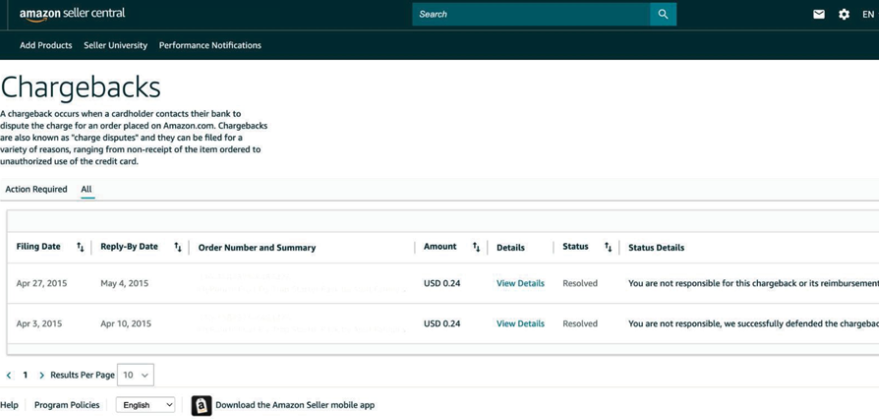
| CB | Chargeback |
| The reversal of a product payment from a customer disputing or refunding it through their credit card issuer or bank. | |
| CC | Customs Clearance |
| The regulated process of nations inspecting and allowing imported goods into their local areas. | |
| COGS | Cost Of Goods Sold |
| The dollar amount associated with producing a product, including materials and labor. | |
| DS | Drop Shipping |
| A fulfillment method in which a third-party supplier ships products directly to consumers while the seller manages the Amazon listing. The seller is responsible for Amazon customer service and sales and pays a fee to the third-party to handle the shipping of inventory to customers. | |
| EFN | European Fulfillment Network |
| A program available to sellers using Fulfilled by Amazon (FBA) in which inventory is stored in one European country but can be shipped to other European countries within Amazon’s marketplace; helps simplify inventory management across European marketplaces. | |
| EAN | European Article Number |
| A unique 13-digit code assigned to a product for easy identification. Specific to products sold in Europe. | |
| FC | Fulfillment Center |
| A warehouse in which products are processed, stored, and packed and shipped to customers. | |
| FFP | Frustration Free Packaging |
| An Amazon initiative to reduce waste and improve customer convenience. | |
| FNSKU | Fulfillment Network Stock Keeping Unit |
| A unique Amazon identifier to distinguish products within its fulfillment network. | |
| GS1 | Global System of Supply Chain Standards |
| Guidelines for the supply chain community that assist with standard, efficient coordination across entities. | |
| ISBN | International Standard Book Number |
| A unique numeric code assigned to literary material for easy identification. | |
| MCF | Multi-Channel Fulfillment |
| Fulfilling orders from multiple marketplaces through a single fulfillment network. | |
| MCI | Multi-Country Inventory |
| An Amazon program where sellers can store inventory in multiple countries to streamline global operations. | |
| MOQ | Minimum Order Quantity |
| The smallest number of units a supplier is willing to sell in a single order. | |
| NARF | North American Remote Fulfillment |
| An Amazon program that allows brands to sell products via its U.S., Canada, and Mexico marketplaces while keeping inventory in U.S. fulfillment centers. | |
| OEM | Original Equipment Manufacturer |
| A manufacturer that produces product parts for another manufacturer’s or reseller’s product. | |
| OOS | Out Of Stock |
| When a product is not immediately available for sale because all of its inventory has been sold. | |
| PL | Private Label |
| A retailer-owned product that is usually marketed alongside other brands’ products; also considered “private brand” or “private-label brand” | |
| SKU | Stock Keeping Unit |
| A unique code assigned to each product within a retailer’s inventory. | |
| TNO | Total Number of Orders |
| The total quantity of orders placed by customers over a period. | |
| VAT | Value Added Tax |
| Tax added to goods at every stage of the supply chain. | |
| WL | White Label |
| A product marketed and sold by a company different from the one that created it. | |
| WS | Wholesale |
| The act of buying goods in large quantities and selling them to other businesses. | |
| WPI | Wholesale Product Investment Spreadsheet |
| A tool for wholesalers to track product investments. | |
What Are We Missing?
About Brandwoven







Brandwoven is the gold standard in full-service Amazon agencies. Their team is driven by success and a proven track record of results that no one else in the industry can match. They took the time to really learn our business and have customized their support to meet all of our business needs. The level of trust they have built with us is a direct result of standing behind what they promised and delivering more than asked! The best decision we made to drive our Amazon business to new heights was to partner with Brandwoven. They are our long-term partners and we are winning together.