When the dust settled on Amazon’s massive four-day Prime Day event this June, the headlines were exactly what you’d expect: Adobe reported a record-breaking $26.4 billion in U.S. online spend. But macro-level billions don’t tell the whole story.
In reality, many brands saw soft results as the four-day event created weaker performance patterns than expected, especially outside lower-priced and replenishable categories.
At Brandwoven, we actively managed our brands through Prime Day 2026. While the media focused on record-breaking spending, our team was in the trenches navigating a sales environment with a highly fatigued, deal-hunting consumer base.
We want to share what actually happened behind the scenes. Here is a look into how we prepared brands for Prime Day, the realities of the four-day format, and the real-time pivots we made for client accounts.
Going Into Prime Day: Prep & Expectations
Preparation for Prime Day 2026 required more cross-functional coordination than ever before. Going into the event, our advertising team noted that aggregate May ad spend was up nearly 30% year-over-year and CPCs had already risen 12%. We knew we were walking into an incredibly expensive and competitive ad environment.
We also anticipated a highly volatile week because Amazon wasn’t the only major player vying for consumer dollars. With Walmart Deals and Target Circle Week running overlapping promotions from June 23rd through June 26th, we knew consumers were going to be aggressively comparison-shopping.
This led us to rethink our cross-channel strategies. Knowing that consumers would be jumping between marketplaces to find the best discounts, we worked to navigate the overlap for our brand partners. Instead of running a uniform discount across all channels (which would risk platforms cannibalizing each other’s sales), we often ran concurrent promotions on both Amazon and Walmart but strategically split their discounted assortment so each platform featured different items.
As we headed into the events, our Client Success Managers and Marketing teams aligned using trackers and audits to monitor our brands’ catalogs. We implemented this rigorous strategy to ensure all ASINs remained live, deal badges were displaying correctly, and inventory levels were holding steady so we could make tactical pivots at a moment’s notice.
Real-World Brand Results from Prime Day 2026: Wins & Losses
An Explosive Day 1
Day 1 of Prime came with an initial surge of traffic, and many brands capitalized on it immediately:
- Tools Client: Crushed 32% of their event forecast by 8:00 a.m.
- Home Improvement Brand: Generated 511% of their normal daily sales and secured the #1 Best Seller badge.
- Boat Care Brand: Saw 816% higher sales than the same day last year (although it was the brand’s first year with product in FBA to participate).
- Toy Seller: Experienced 567% more sales compared to their normal daily Amazon revenue.
Mid-Event Lull: Shopper Fatigue & Traffic Drops
Days 2 and 3 of Prime felt lackluster, driven by consumer overload from the overlapping Target and Walmart sales. At this point, traffic and conversion rates were significantly down compared to Day 1, and CPCs had reached an extreme.
Day 4 Results & Overall Takeaways
Historically, tentpole events like Prime Day follow a predictable trajectory: Day 1 always brings the biggest spike, followed by a mid-event lull, and ending with a massive final-day surge. While Day 1 of Prime Day 2026 delivered explosive volume, that traditional final-day rush was surprisingly muted. Because the extended four-day event concluded on a Friday (June 26th), consumers were already logging off and shifting into weekend mode. While a handful of our clients successfully captured late traffic to make Day 4 their strongest day, across Amazon, traffic was down significantly versus the prior closing days of Prime.
This compounded the reality that a longer event did not equate to proportionally higher sales. Our internal metrics paint a picture of a highly fatigued, budget-conscious consumer. On Day 2, Bloomberg reported that early Prime Day spending fell 16% year-over-year. By the end of Prime Day, Numerator reported that average order size had dropped to $47.66 (down from $53.34 last year), and average household spend fell by roughly 8%.
These macro-level results closely matched what our managed accounts experienced. Hitting roughly 50% of event forecasts became the general benchmark industry-wide for brands navigating this slower summer event. Ultimately, the combination of consumer fatigue, the extended four-day event duration, and overlapping sales from major competitors like Walmart and Target diluted the traditional Prime Day rush.
Perhaps the most crucial lesson from Prime Day 2026 is that the days of passive participation are over. In previous years, the sheer volume of traffic generated by Prime Day meant that even brands who didn’t run deals would see a significant organic sales lift. This year, brands that didn’t promote saw zero lift.
With Amazon pushing sales events to four days and competitors like Walmart and Target running simultaneous promotions, consumer overwhelm is at an all-time high. Shoppers are no longer buying just because an event is happening; they are carefully hunting for true value. Moving forward, brands must understand that active promotional investment, aggressive ad optimization, and real-time catalog management are no longer “best practices” but simply the cost of entry.
Retail-Wide Results vs. The Reality of Consumer Behavior in 2026
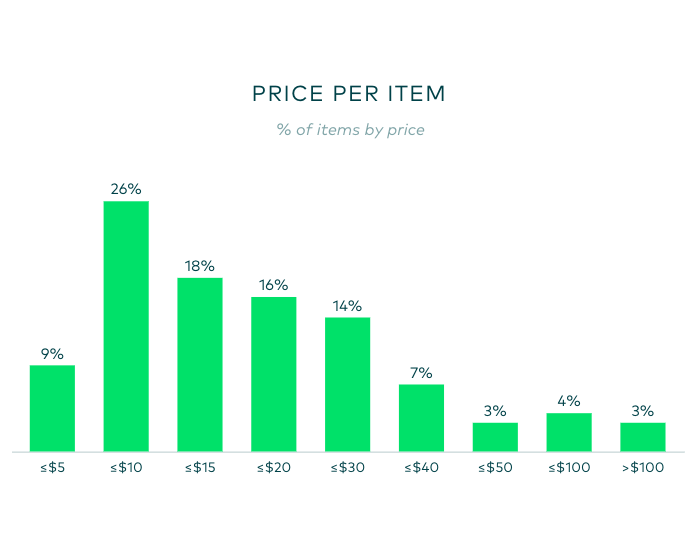
While the macro data suggests luxury splurges, the reality was a consumer base focused almost entirely on budget control. According to Numerator, a staggering 69% of all items purchased during Prime Day sold for under $20, dragging the average price per item down to just $23.23. Shoppers were actively avoiding big-ticket items; just 3% of items sold were priced above $100. Even when looking at total order sizes, only 10% of all orders exceeded the $100 mark.
Further proving that wallets were pinched, shoppers leaned heavily on financing to afford their carts. Buy Now, Pay Later (BNPL) options accounted for roughly 6.6% of all online orders, driving over $2 billion in spend—a clear indicator that some consumers were stretching their budgets to complete purchases.
The Strongest Category: CPG & Consumables
Instead of sitting at a desktop to buy televisions, consumers were deal-hunting on the go. Mobile shopping hit an all-time high, driving over 54.2% of online sales. What were shoppers buying on their phones? Many were aggressively restocking Consumer Packaged Goods (CPG) and everyday essentials. Numerator data revealed that the top-selling items of the entire event were Premier Protein Shakes, Liquid I.V. Packets, and Temptations Cat Treats.
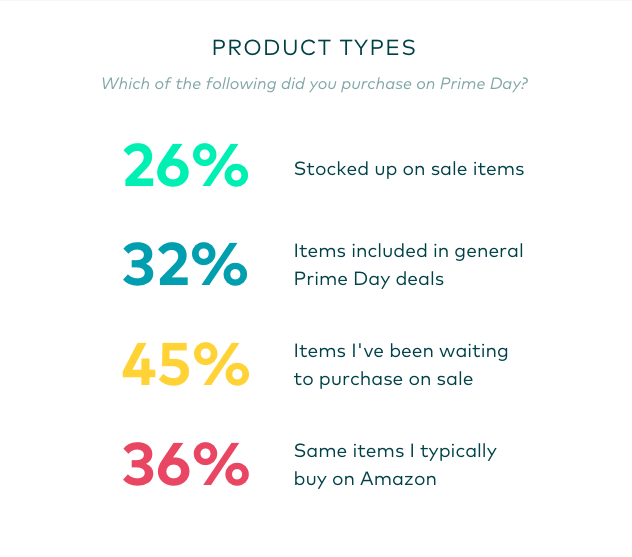
Consumers were incredibly intentional. Nearly half of surveyed shoppers admitted they used the event to buy items they had specifically been waiting to purchase on sale, while 32% used the discounts to stock up on household items.
Our Client Results in CPG & Consumables
Across our portfolio, we saw this same trend play out. Products that consumers already wanted and needed to restock performed exceptionally well—if they were highly promotional.
- Garden Brand: While auditing ad performance, we noticed a clear pattern: the highest conversion rates were coming from practical essentials like compost and fertilizer. Despite facing a massive 118% year-over-year spike in CPCs, aggressively leaning into these discounted items drove a 48% lift in conversion rate and 128% overall sales growth for the brand across the multi-day event.
- Cleaning Products: Shoppers also aggressively hunted for deals on routine household chores. For one cleaning products brand, we ran promotions across 43 different ASINs. The demand for these items was so intense that one of their top cleaners completely sold out of its committed promotional units by Day 3. Our team quickly executed an active pivot to increase promotional limits for an alternative SKU, successfully capturing the remaining wave of restock traffic.
- Baby Products: Data from Chain Storage Age noted a huge surge on Day 1 of Prime in baby wipes and diapers, up 85% compared to average June sales. We experienced this exact surge with one of our baby products brands. Parents actively stocking up drove over 5,000 orders by Day 3, and the brand ended Prime with a massive 18.56% ad conversion rate.
Shoppers today are not buying simply because an event is happening. However, brands that sell consumable, highly promotional items, and specifically target shoppers looking to restock their everyday lives are likely to drive the highest sales volume.
Use Prime Day Learnings for Q4 Prep
As a first step, brands should head into Seller Central (Reports > Custom Analytics) to pull their event performance and 2025 comparisons using Amazon’s newly released Prime 2026 dashboard.
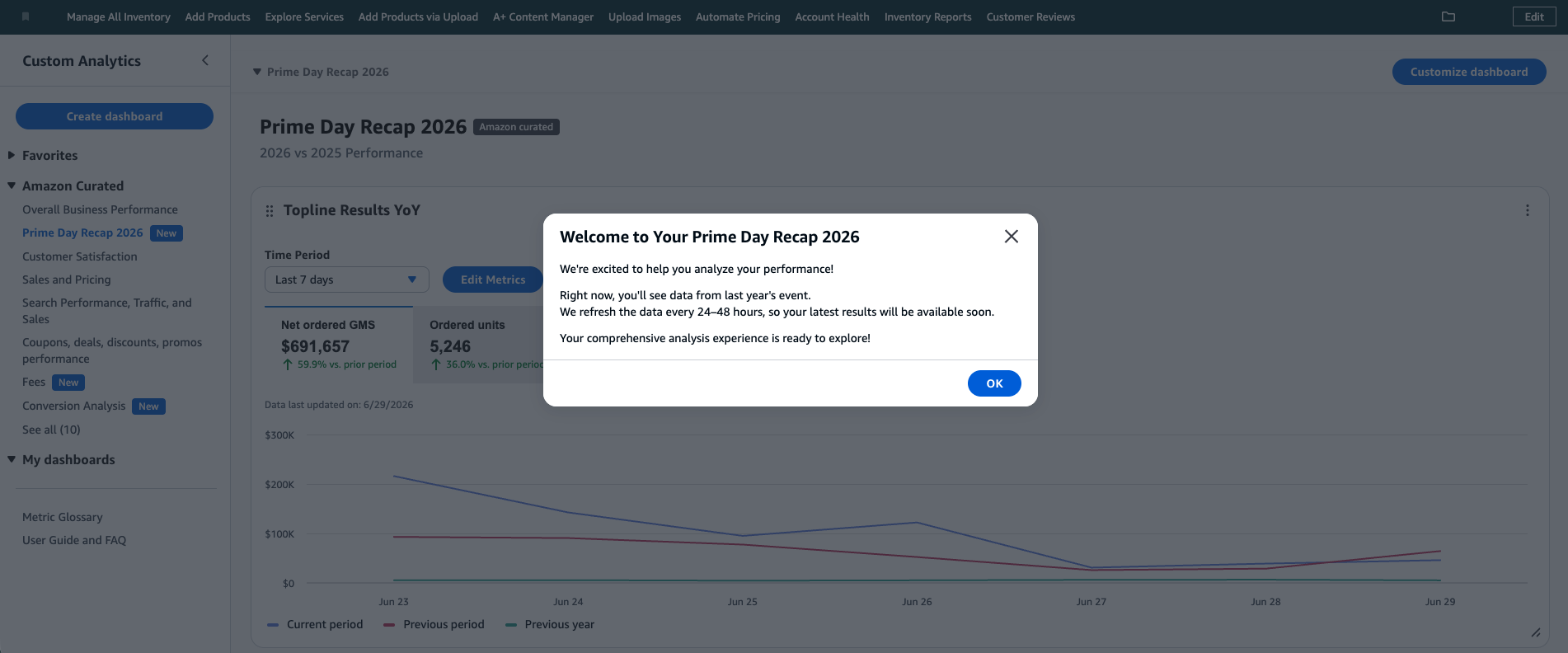
After analyzing what happened during Prime, shift your attention to the next tentpole event coming up in Q4. Amazon recently released its Peak Readiness Guide in Seller Central covering best practices for Prime Big Deal Days and Black Friday/Cyber Monday.
Based on what we saw this Prime Day, here is how brands need to prepare for Q4:
- Plan for Traffic Volatility: As consumers browsed Walmart and Target discounts during Prime, traffic on Amazon was lower than expected and overall unpredictable. With even more retailers running discounts in Q4, brands should expect extreme CPC spikes to continue (especially for competitive CPG categories). Keep your advertising team “in the trenches” during these promotional periods to make quick adjustments if campaigns aren’t converting.
- Expect Consumer Selectivity: Prime Day proved that shoppers are incredibly intentional and budget-conscious. In Q4, do not expect shoppers to buy simply because an event is happening or because your products are on sale. If consumers follow the same pattern as Prime Day, they will be ruthlessly hunting for the best possible value and prioritizing essentials, consumables, and CPG items.
- Don’t Rely on Event Length to Drive Performance: With Prime Day, we’ve seen that extending it to four days did not drive proportionally higher sales. Instead of creating sustained momentum, the longer shopping window eliminated urgency. Brands must plan their inventory and daily ad budget with this behavior in mind.
- Protect the Buy Box: Supply chain visibility and listing health are two of your strongest defenses. Amazon has already set FBA inbound inventory deadlines for Q4: early-mid September for Prime Big Deal Days and mid-late October for Black Friday/Cyber Monday. To mitigate capacity limits, brands anticipating high volume should consider utilizing Amazon Warehousing and Distribution (AWD), which avoids peak storage rates.
- Protecting Margins While Navigating Q4 Fees: As the cost of participating in promotional events continues to rise, Amazon’s newly announced Q4 fees will squeeze margins even further. Between October 15, 2026, and January 14, 2027, sellers who use Amazon’s fulfillment network will face an average fee increase of $0.32 per unit plus a 3.5% surcharge. To protect your holiday profits, we recommend running profitability analyses before committing to any deals.