Introduction: The Shift to Conversational Commerce on Amazon
Amazon is starting to supplement keyword shopping with AI-powered conversational shopping. We predict that in several years, conversational shopping experiences will outpower keyword shopping.
Features like Alexa for Shopping and “Know Before You Buy” (a newer PDP module that uses AI to summarize customer feedback) are just two of the marketplace’s recent additions that help shoppers quickly decide whether or not to purchase a given product. These AI summaries are also changing how shoppers digest and evaluate product information.
In this article, we’ll provide a general overview of the new Prompts Report found in the ad console, how it ties into AI-driven product discovery on Amazon, and how brands can use it to improve keyword targeting and conversion-focused PDP content.
What is the Amazon Ads Prompts Report?
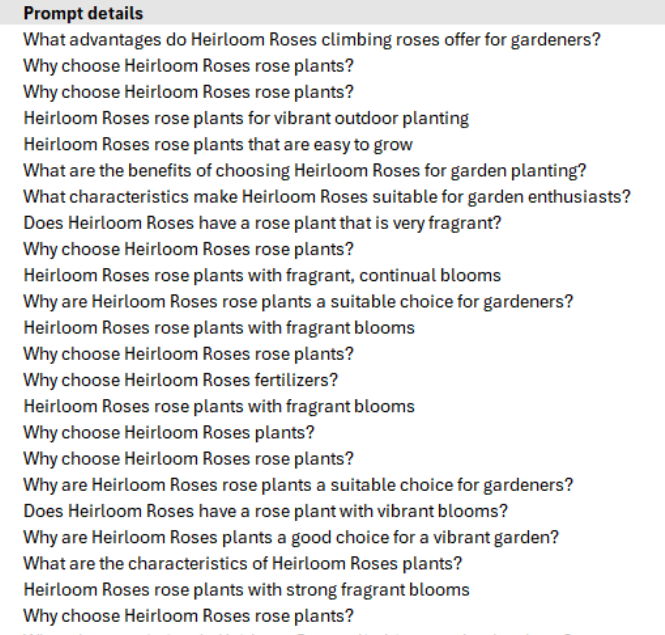
In the Amazon ads console, there is a report type called “Prompts” which is generated by pulling data directly from brand-provided inputs, such as PDPs and Brand Stores. The report captures conversational product questions across Amazon’s AI-powered shopping experiences. These prompts can then be used to trigger ad placements for a brand’s Sponsored Products and Sponsored Brands campaigns.
While Amazon Prompts initially launched as a free beta program, it is now Generally Available (GA). Brands who use prompts are charged on a Cost-Per-Click (CPC) basis using existing campaign budgets.
Since Amazon prompts launched within the past couple of months, spend is still very low (only $100-$200 across ~15 brand accounts recently reviewed), but this is expected to grow significantly as Amazon (and shoppers) lean heavier into AI.
Why is the Amazon Prompts Report Valuable?
The Prompts report reveals actual, high-intent questions consumers are asking during the research and purchase phases. Periodically analyzing these search terms can help influence your content and campaigns, including:
- Ad Copy: Use the prompts as readymade ad messaging to align copy with how consumers are actively thinking and searching.
- Advanced Keyword Harvesting: High-intent prompts can be harvested directly into exact match, phrase match, and long-tail campaigns to capture specific conversational queries.
- Campaign Structuring by Intent: Move away from just standard keyword and product targeting. Instead, build campaigns organized by use cases, product benefits, and shopper intent rather than generic keywords. For example, create separate campaigns for consumers in the “research stage” versus those “ready to purchase.”
Using the Prompts report effectively allows brands to anticipate shopper questions and showcase their product expertise at scale during critical decision points.
Our advertising managers are beginning to run this report regularly for our Amazon clients (which provides ASIN-level data, campaign sources, impressions, sales, and click-through rates, and more). Going beyond advertising use-cases, we’re also sharing the insights with our catalog and creative teams for identifying and resolving any content gaps preventing us from resonating with more shoppers.
One Crucial Caveat: Read This Before Implementing Amazon Prompts Data
Although the Amazon Prompts report is helpful for several things, there is one important note to consider before blindly implementing the search data to your campaigns and product content: Some shopper questions may involve policy-sensitive or risky language that could suppress a listing if added to the page.
For example, “mold” is a flagged term. Including it in your Amazon product page copy, images, or even backend fields could create a policy risk and cause the listing to be suppressed. Because of this, even if including it would help answer a shopper’s question (such as whether a bath toy is “mold-free”), you should not add it to your product page.
Teams must evaluate prompt data critically before deciding whether to apply the terms to their campaigns or content.
Where to Find Amazon Prompt Data in the Ads Console
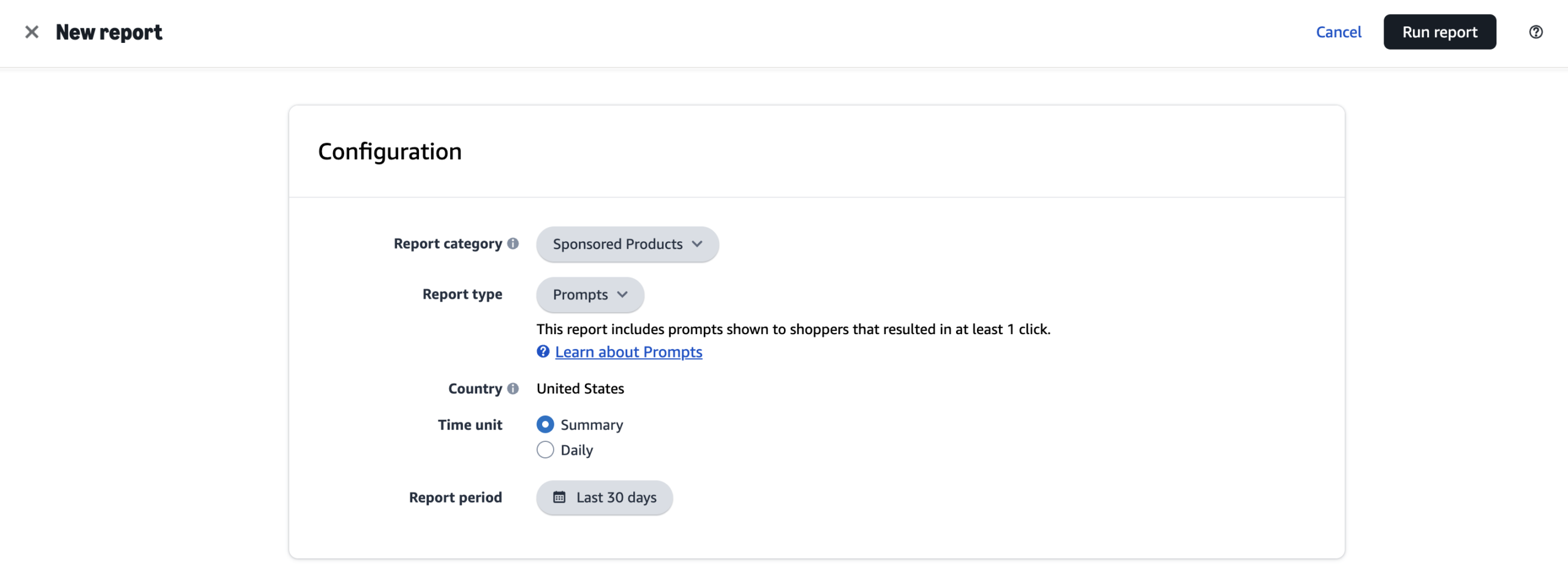
Brands can access prompts data by navigating to the Amazon Advertising Console, clicking “Create Report” under Sponsored Ads Reports & Sponsored Brands, and selecting the “Prompts” report type.
Additional Amazon Prompt Report Use Cases: Catalog & Competitor Data
The Amazon prompt report offers insights into the questions consumers want to know about your products, but we recommend that you take it a couple steps further for the best results.
After collecting and assessing your own prompt report, don’t stop there. We’d suggest you also collect the prompts that appear directly on your competitors’ listings, and any additional prompts where Alexa surfaces competitor products instead of yours for any attributes or questions that are equally relevant to your product. This will give you the highest chance of ensuring your listing gets in front of your ideal customer and that you do not leave any opportunity for other brands in your category to steal a sale—without at least a little friendly competition first.
Once you have a more comprehensive list of those prompts, you can begin building them into your GEO listing optimization strategy. This process includes collecting and answering the contextual questions of who, what, where, when and why this product is relevant for the customer in the following areas:
- Listing Image Text Overlays – Images are your first and most important opportunity to convert an impression into a click and subsequently into a sale. Having relevant answers to customer questions answered here will drive the highest conversion rates.
- Bullet Points – The bullets on your PDP are the highest driver of traffic to your listings. Using your bullets to answer prompts and customer questions in a way that is either exactly how the shopper searches for it or as semantically similar to that prompt as you can get (while maintaining readability) will give your product a higher chance of showing up for shoppers who are searching those same phrases.
- A+ Content – If a consumer who has already made it to your listing needs an extra push to get them over the finish line, they may ask the Alexa shopping assistant prompts specifically related to the product. In that scenario, the information included in your A+ Content will likely be used to help answer those questions. The A+ modules give you additional real estate to answer these prompts in greater detail and help ensure that Alexa for Shopping will confidently be able to respond on your behalf as a conversion assistant.
- Complete & Accurate Backend Catalog Data – Amazon includes the most relevant attributes that a customer cares about for each product type within the Category Listings Report and category-specific flat files. If you have filled out your required and recommended product attributes, you will naturally answer many of the prompts that Amazon cues up for consumers to ask. The data you provide on the backend will contribute to consistent and structured product information for Alexa for Shopping to reference in its answers. Doing so allows the AI to directly compare your submitted product data against competitor data available in the same format, which is then referenced when a customer asks something like “compare these two products.”
Conclusion: Preparing for an AI-First Amazon Shopping Experience
As Amazon continues to heavily push AI features, brands must build a continuous feedback loop between their catalog, creative, and advertising teams to stay optimized. However, optimizing for an AI-first Amazon environment is complex, and blindly implementing new conversational keywords is not worth the risk of potential policy violations or suppressed listings—so choose the terms you target in campaigns and content carefully.
If you need a partner who understands the nuance of agentic shopping across advertising, creative, and catalog to turn this raw prompt data into safe, highly targeted strategies that capture shopper intent, our team would love to get involved. At Brandwoven, we help Amazon brands navigate this new landscape—from harvesting high-intent Prompts for precision ad targeting, to optimizing product content to better align with AI-powered shopping experiences and standardizing backend catalog data.
Ready to see how your top products stack up against competitors? Let’s start talking about how to future-proof your Amazon presence. Reach out to our team to get started.