Introduction
Through Amazon Brand Registry, gain access to your very own conversion-focused brand destination – where no competitor products or ads are displayed.
The Amazon Brand Store feature improves organic discoverability through branded search terms and provides a landing page for external traffic (social, email, PR).
Let’s dive into post-launch optimization strategies for your Amazon Brand Store.
Why Amazon Brand Stores Matter for Retail-Ready Brands
Brand Stores protect brand equity by eliminating competitor ads on your brand pages (unlike standard product detail pages).
As Amazon has proven, this creates a conversion advantage for your brand:
- On average, shoppers who visit a Brand Store purchase 53.9% more frequently, have a 52.1% higher add-to-cart rate, a 42.4% higher average selling price, and a 71.3% higher average order value compared to those who do not.
- New-to-brand shoppers who visited a Brand Store were 62.7% more likely to purchase compared to those who didn’t. When they did purchase, they spent 72.3% more on their order, on average, than those who didn’t visit a Brand Store at all.
In reality, organic click-through rates to Brand Stores are usually between 1-2%, so very little traffic goes there – unless you are driving traffic with ads. So, investing in your Brand Store connects directly to your Amazon advertising strategy; Sponsored Brands ads drive traffic directly to your Store, giving those shoppers a controlled brand experience from ad click to checkout.
Regardless of whether your Brand Store traffic is from organic discovery or ads, curating this branded space allows you to push buyers past competitive offerings into a closed environment with only your products.
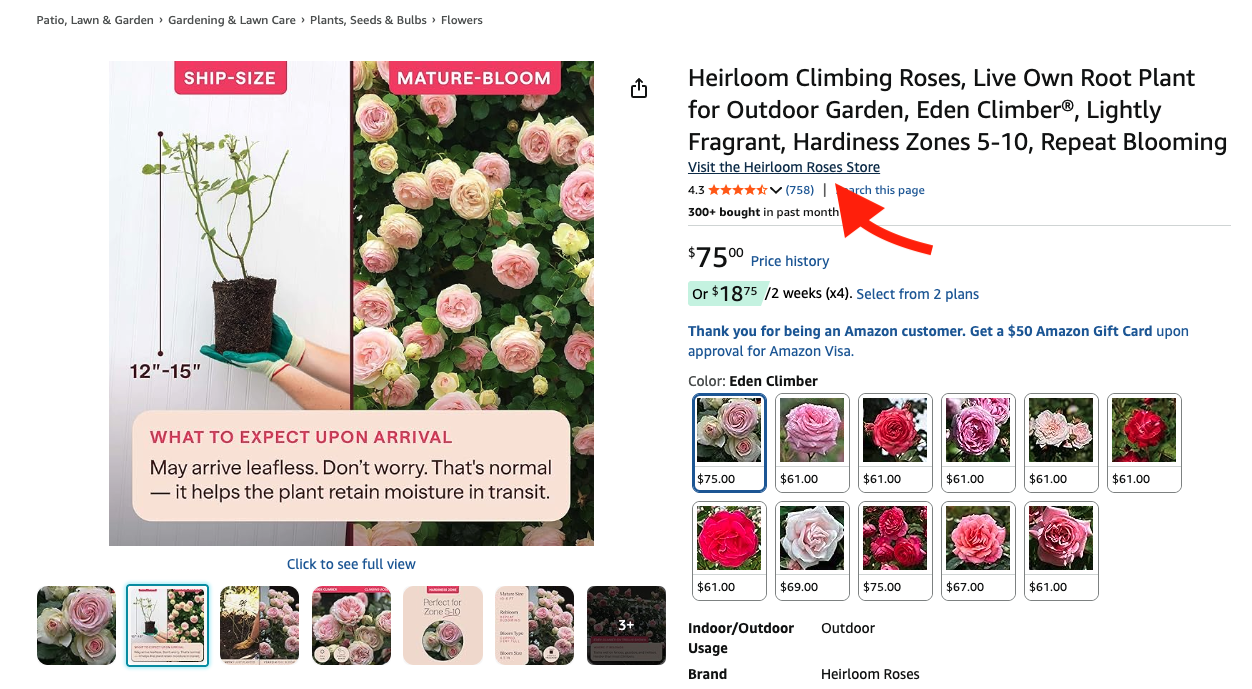
A Common Misconception About Amazon Brand Stores
One of the most common misconceptions about Brand Stores is the “set it and forget it” mindset. Technically, you can create your store and never update it. However, the reality is that if you are serious about using your Brand Store to drive better sales performance, it is highly recommended that you update it regularly (eg: seasonally, when new products launch, when hero products become out-of-stock, when you have deals running, etc.). You can also run A/B tests for additional refresh recommendations, making sure your store is always aligned with shopper behavior.
Amazon found that, on average, Brand Stores updated within the past 90 days had 11% more repeat visitors and 13% higher attributed sales per visitor.
Design & Conversion Guidelines for Amazon Brand Stores
The difference between a functional Brand Store and a high-performing one that drives measurable sales lift comes down to design, functionality, and shopability. Store copy should emphasize how products actually solve customer problems or improve their daily lives.
One important best practice is the “above the fold” principle: the hero image and first subsequent section (visible when landing on the store before scrolling down) are key determinants of whether shoppers engage or bounce. Make this space count!
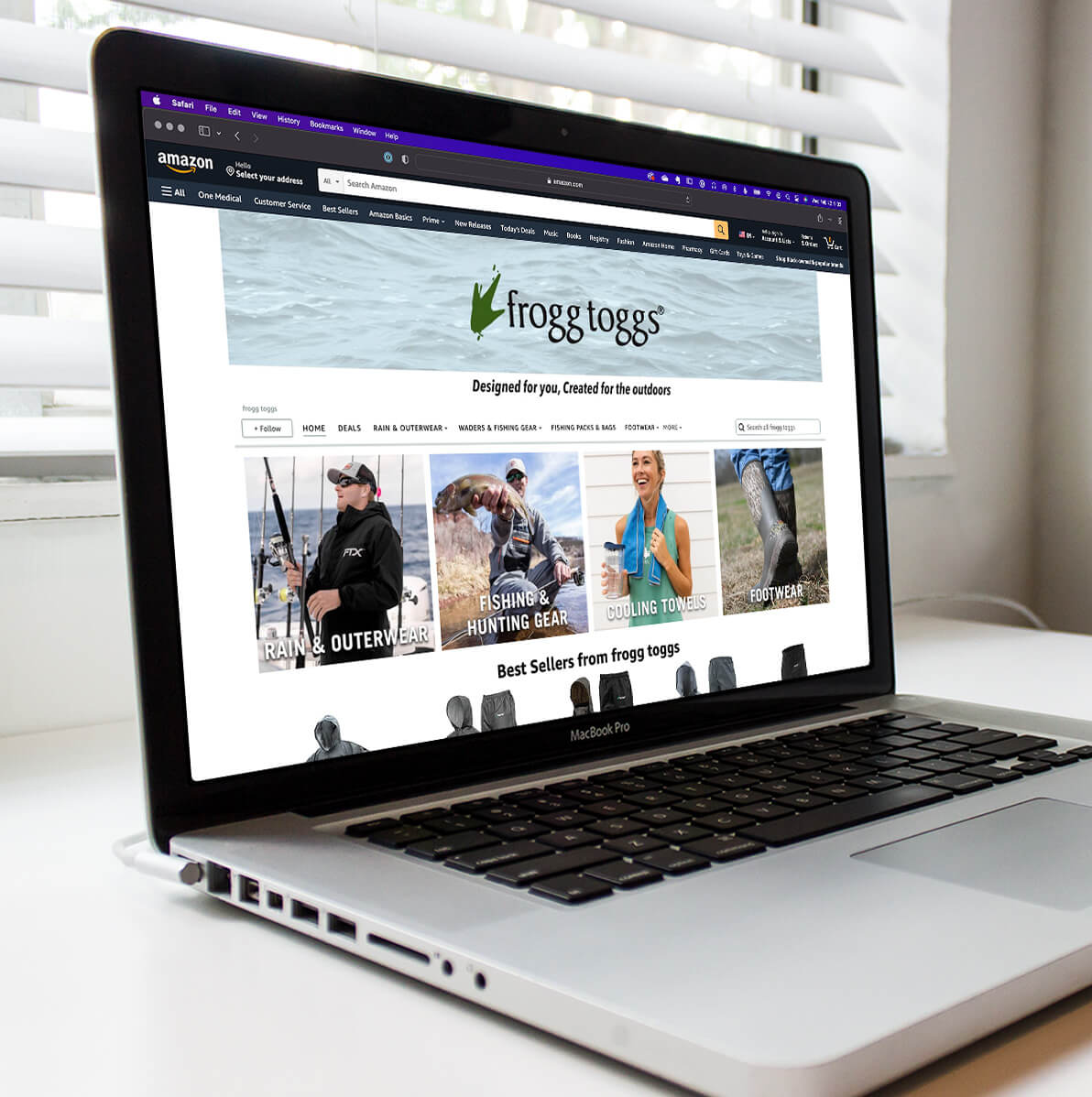
Hero Image Strategy: Your 3-Second Brand Impression
The hero image tile is the wide banner at the top of your homepage. This image immediately establishes brand identity once a shopper lands on your store. Focus on visual impact.
We recommend using lifestyle imagery versus a plain product on a white background. Showing products in context (eg: apparel on real people, home goods in styled rooms, etc.) helps shoppers envision usage.
Your hero banner is a great place to test seasonal variations, reflect new collections, or showcase different brand campaigns. Try updating it quarterly to see what resonates most with your customers.
Guiding Shoppers with Easy Navigation & Page Structure
Design your Amazon Brand Store for scannability:
- Use clear category labels (“Running Shoes,” not “Performance Footwear”) and logical grouping (group by product type, not by vague lifestyle themes).
- Try to limit top-level pages if possible as too many pages can overwhelm shoppers (instead, use subcategories for deeper catalog organization).
- Include a “Shop All” page to give undecided shoppers a starting point (showcase your strongest products at the top).
- Add an “About Us” page with in-depth copy regarding your brand’s values, sustainability efforts, or unique manufacturing processes.

Brand Store Product Curation: Featuring the Right ASINs
Your Brand Store is prime real estate, so feature products that drive profitability and inventory turn. For example, sort all of your products by sales generated. Include the highest revenue-generating ones at the top of your homepage, the middle ones on category pages, and the bottom-tier ones on subcategory pages only.
Rotate featured products to keep your store fresh and give newer products visibility alongside established best sellers.
SEO Guidelines for Amazon Brand Stores: Optimizing for Discoverability
As mentioned earlier in this article, organic click-through rates to Brand Stores are usually pretty low, however there is a huge opportunity to leverage Sponsored Brand ads once your store is launched. These ads appear in Amazon search results and link directly to your store.
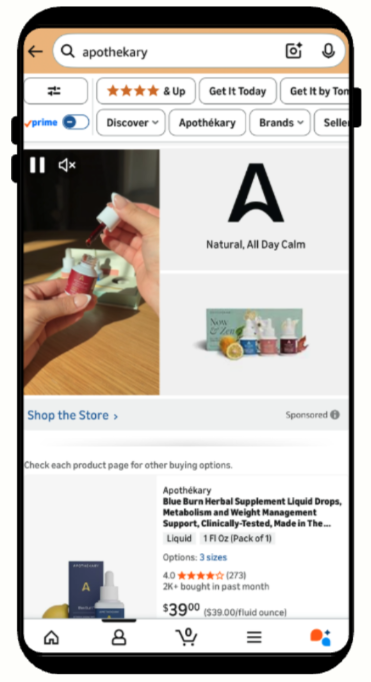
Leveraging Sponsored Brands Ads to Drive Store Traffic
Sponsored Brands are the primary paid channel for Amazon Store promotion. These ads link directly to your Store homepage or a specific subpage. You can create different campaigns that target different terms and send shoppers to different areas of your store. For example:
- Branded terms (your brand name) -> Send traffic to your Brand Store homepage
- Category terms (e.g., “running shoes”) -> Send traffic to the subpage where that specific type of product is highlighted
You can also test variations across the target term + landing page. For example, if you have a Best Sellers page, you could test sending branded traffic there.
Targeting tip: use Sponsored Brands video ads to showcase products and drive traffic to your Store. Amazon has seen “Sponsored Brands video drive 32% more conversions than static Sponsored Brands creative in some accounts.”
Keyword Strategy for Your Amazon Brand Store Pages & Product Tiles
Amazon indexes the text in your Brand Store tiles, image alt text, and your product titles. Because of this, we recommend including category keywords in your product and Brand Store page names and text tiles.
For example, if you sell organic baby food, name the page “Organic Baby Food” and include that phrase in the page’s introductory text tile.
Important: As much as including keywords is important, you should also consider the user experience. Shoppers can be turned off from a brand or product if there is an obvious attempt at keyword stuffing. As a best practice when approaching copywriting of any kind, balance your brand voice, natural phrasing, and SEO terms.
Post-Launch Guidelines: Maintaining & Improving Your Amazon Brand Store
Tracking Brand Store Performance with Amazon Insights
Amazon’s Store Insights dashboard can be accessed via Stores → Manage Stores → [Your Store] → See Insights and is the primary analytics tool for viewing store performance and discovering areas for improvement.
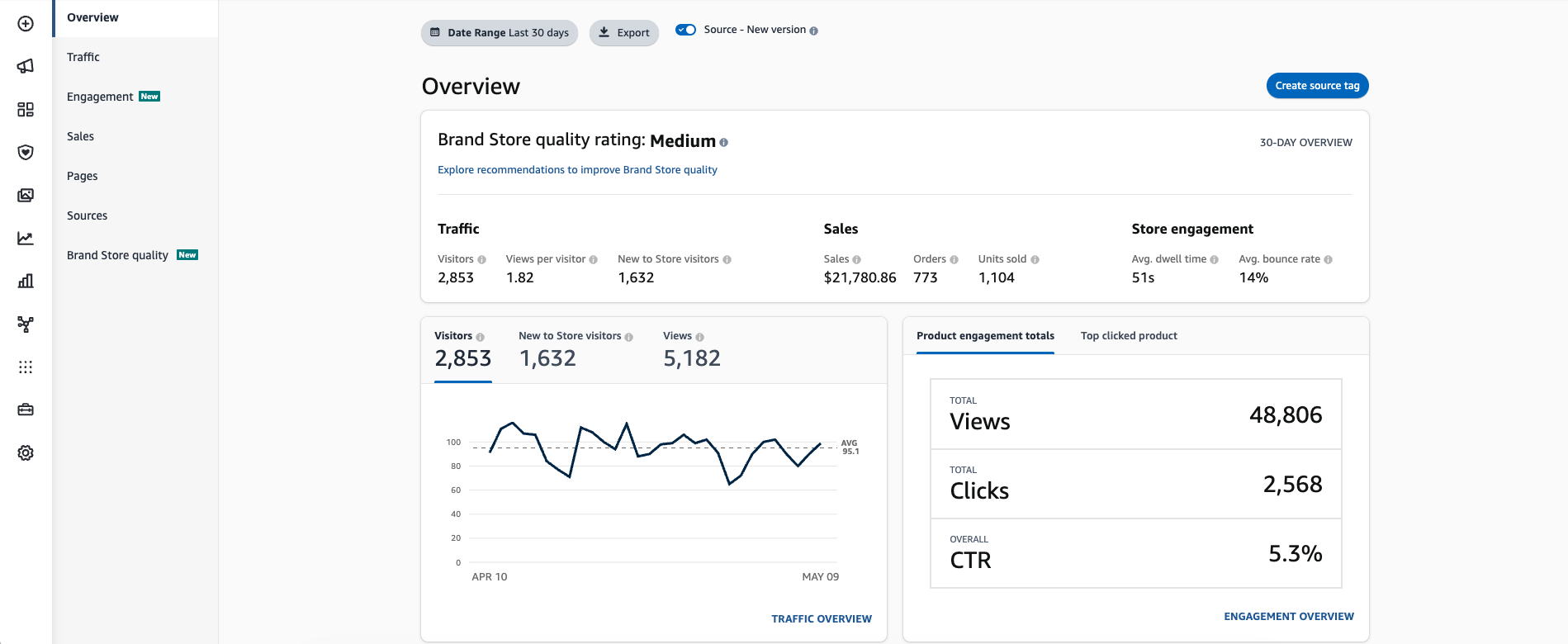
Amazon provides insight to key metrics like daily visitors, page views, sales attributed to Store traffic, and the top sources for driving shoppers.
We recommend reviewing your Store Insights regularly to identify trends and plan for any needed updates or tests. At minimum, review your performance once a quarter. If you are frequently making changes or just went through an overhaul, taking a look every day or week will give you a closer look at what’s happening and if everything is operating as expected.
Performance ties into how much traffic you drive, on average, based on ads investment and organic ranking for key terms. You might see traffic spike around holidays, then immediately dip after.
If you notice any negative trends, such as high traffic but low sales, this is an indicator that your products are not matching shopper intent for the given keyword, or that the layout is too complex for easy scanability. In cases like this, test promoting different ASINs or page layouts to see if performance improves.
Case Study: Brandwoven upgraded Safariland’s Amazon storefront to better reflect the brand’s image and products, leading to a 37% increase in conversions! Read how we did it.
A/B Testing Framework for Your Amazon Brand Store
As you manually adjust Brand Store variations, it’s crucial to only change one element at a time, wait a few weeks for statistical significance, then compare metrics from before/after.
Some elements worth testing include:
- Hero image (lifestyle vs. Seasonal vs. Brand logo)
- Including a video on your home page (will it improve engagement?)
- Page order (does moving “Best Sellers” to the second position increase sales?)
- Product tile density (grid of 12 vs. grid of 6)
Seasonal Brand Store Refreshes, New Product Launches, & Infographics
- Launching New Products: As you launch new products, integrate them into your Brand Store by creating a “New Arrivals” section on your homepage or adding a new category page. Promote these products further by promoting them through Sponsored Brands ads.
- Creating Infographics: If you have particularly complex products or often receive questions from customers about how your product works, utilize infographics to visually explain features or specs. You can also curate customer testimonials or reviews to use as social proof, which influence purchasing.
- Seasonal Refreshes: If seasonality is relevant to your brand, refreshing your Brand Store hero image is another small adjustment that might impact sales growth (e.g., holiday themes in Q4, back-to-school in Q3, Mother’s Day, etc.).
Avoid This Mistake: Treating Your Brand Store Like a Static Catalog
Problem: Sellers create a Store, publish it, and never update it which leads to stale content and declining engagement.
Fix: Plan for quarterly Brand Store performance reviews and potential content refreshes. Treat your page like an ongoing brand experience, not a set-it-and-forget-it destination.
Guidelines for Aligning a Brand Store into Your Broader Amazon Strategy
The Brand Store is just one component of a holistic Amazon presence. To get the most out of your Brand Store investment, integrate it with your advertising campaigns, catalog work, and general brand defense tactics, if applicable.
Connecting Stores to Sponsored Brands and Sponsored Display
Throughout this article, we’ve discussed how Sponsored Brands ads drive qualified traffic to your Store as shoppers who click on an ad are more brand-aware and likely to convert. A complementary tactic that we recommend is linking Sponsored Display ads (for retargeting) to your Store. For example, if a shopper views one of your products but doesn’t purchase, retarget them with a Sponsored Display ad that directs them to your Brand Store’s “Best Sellers” page.
Using Your Amazon Brand Store to Support External Marketing Campaigns
As we’ve already mentioned, organic traffic to your Amazon Brand Store is likely to be low. So, one of the best ways to take full advantage of this real estate is by promoting your Brand Store through off-Amazon channels, such as:
- Email campaigns
- Social media bios
- Influencer partnerships
- PR materials
- Off-Amazon ads (Google, Bing, etc.)
This strategy can be used all year round, but we highly recommend leaning heavily into it during peak seasons such as Q4/holiday and Prime Day. This is one of the simplest ways to generate awareness of your Amazon products and discounts and leverage the audience that you have already built through other channels.
Especially when promoting your Amazon Brand Store externally is it important to create a cohesive visual experience. Your Amazon store should align with your brand’s broader strategic efforts across your website, social media, and other marketplaces. When everything matches, it builds recognition and trust no matter where a customer finds your product.
Amazon Brand Stores for Defensive Strategies
Regardless of whether you invest in ads, push off-platform traffic to your Brand Store, or invest in any of the other strategies we’ve mentioned throughout this article, one key point remains: Your Brand Store is an authoritative, fully controlled destination for your product catalog. There are no competitor ads, unlike standard product detail pages, and you alone decide what the shopper experience entails. This takeaway should be valuable enough to convince you to build a Brand Store if you haven’t already.
Conclusion: Your Pathway to Expert Amazon Support
For brands managing complex catalogs or seeking professional Brand Store performance optimization, we offer Amazon management services that may be exactly what your team needs. From performance reviews, ongoing updates, A/B tests, and everything in between, let us be your Amazon marketplace partner for the long-haul.