Article
Amazon’s AI-Generated Images Policy: What Brands Should Know
Amazon’s recent disclosure around AI-generated people in images is tied to a new legal requirement: any AI-generated person, or “synthetic performer,” included in an advertisement for the purposes of appearing natural now requires disclosure.
As AI-generated creative becomes more common, transparency and trust are areas where brands can stand out. This is positive for national brands who are investing in imagery, as it is now going to be more difficult for brands relying on cheap AI imagery to effectively compete. If you offer a premium presentation, purposefully leaning away from using AI-generated people in your content helps your brand stand out and make your creative decisions appear more intentional.
This update is also a useful signal for brands watching how ecommerce marketplaces handle AI-generated creative as a whole.
Let’s talk about why this change went into effect, how Amazon is enforcing it for brands selling on its marketplace, and why it’s a win for premium brands who are already investing in authentic imagery.
Why the Amazon Policy Went into Effect
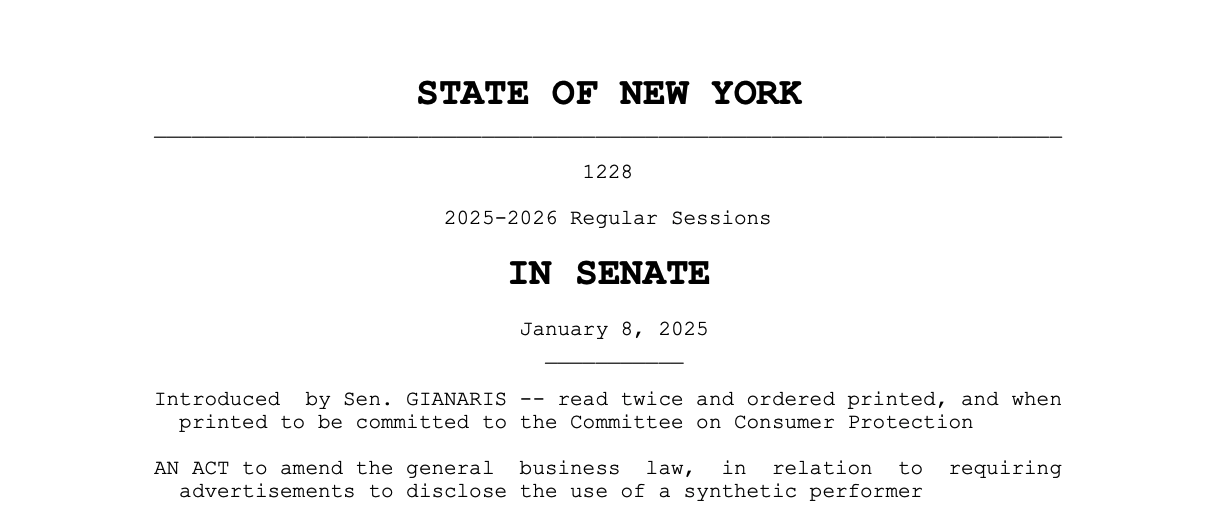
Amazon is now requiring brands to identify and label AI-generated people in their account imagery (listing images, A+ Content, brand story, ad creative, and brand store). This policy change followed a recent New York law around synthetic performer disclosure. New York’s law requires advertisements using a synthetic performer (i.e. AI-generated person) to include a disclosure that viewers can easily notice. Amazon’s policy is a response to this external legal requirement.
What Does the Amazon Policy Cover?
The policy requires that Amazon brands must disclose when a person within an image is fully generated by AI. The goal of the new law is more transparency around when AI is used in place of natural imagery, as AI can distort product appearance (size/shape).
The disclosure must be added in the metadata of the image, specifically including the keyword “contains-synthetic-performer.” After adding the disclosure, Amazon may add an indicator that informs customers the image includes AI-generated people. On a seller forum, Amazon support stated that, “whether a disclosure appears may depend on where the content is used and where the person viewing the content is located. It is expected that the visible disclosure may not be displayed in all cases.”

If an Amazon brand uses AI-generated people in images but the required disclosure is missing, the content may face compliance or platform enforcement issues—so this is not just a labeling nuance.
If you’re using AI for minor edits within your imagery, such as background cleanup, jacket/apparel color changes, or lifestyle scene enhancement, these do not fall within the policy requirement.

Areas of the AI Policy That Are Still Unknown
Since the policy just went into effect, and Amazon’s team has clarified that the disclosure may not display on the front end for all shoppers, there are still some open questions around how far the policy extends, and whether more language will be added to it down the line. As we begin to see enforcement take effect, we will learn more about:
- Where the label appears on the live PDP for shoppers, and what it looks like
- How enforcement works for brands who use AI-generated people but do not add the disclosure
- If Amazon will attempt to auto-apply the label on images it believes include AI-generated people
What This Policy Means for the Future of AI Usage on Amazon
This Amazon policy is relatively small on the surface, unless your brand has AI-generated people across multiple images or product pages. Even for brands who don’t use AI-generated people in images, this update says a lot about where Amazon (and lawmakers) are heading in terms of AI transparency.
On Amazon and other ecommerce marketplaces, we’ve seen product imagery heavily influence conversion:
- A cleaning brand saw an Amazon conversion rate of 22%, 2x the industry average, after partnering with our team to redo their digital merchandising.
- A watersports brand grew Amazon sales 109% YoY thanks to our team’s optimized content strategies.
Amazon has always prioritized retaining shoppers and providing a positive customer experience. With AI becoming easily accessible and brand adoption growing, shoppers may start questioning what is real. This gives both lawmakers and marketplaces a direct incentive to create more guardrails with AI usage or, in this case, disclosure.
Recently, we’ve seen Amazon take similar stances to discouraging AI usage for images on its platform. Doing any of the following may lead to your listing being suppressed:
- High-gloss 3D renders which Amazon’s AI deems semantically different from the actual product.
- Claims on your external site that are absent from your Amazon listing, which the AI considers a liability.
- Off-white main image backgrounds which are technically not compliant (only true white, or hex code #FFFFFF, are supposed to be used).
Amazon is Still Pro Artificial Intelligence
Amazon has rolled out a plethora of AI-assisted tools for sellers over the past year:
- Most recently, Amazon released AI-targeted keyword options within its ad console.
- At last year’s Ads Unboxed event, Amazon announced AI-powered tools, “Ads Agent” and “Creative Agent”.
- At Amazon Accelerate 2025, the marketplace’s Seller Assistant tool got a major AI-enhanced upgrade.
- Amazon extended its Rufus chatbot to “Alexa for Shopping”, easily integrating it with Echo products.
- Amazon’s 2025 Earnings Report highlighted AWS, which is used to train AI models like Claude, as its fastest-growing revenue segment.
It’s clear that Amazon is not “anti-AI,” but regardless, the company must oblige with policymakers’ growing interest in AI guardrails—while also ensuring customers who visit the marketplace trust what they’re seeing and purchasing.
How Premium & Established Brands Compete with Natural Imagery
Many large, premium brands are not heavily using AI-generated people in imagery (they may use AI for lighter-touch enhancements instead, which is not relevant to this update).
Regardless of why this rule was introduced, premium brands should pay attention because disclosure standards can shape shopper perception and brand presentation.
Premium brands usually have more to lose from imagery that feels artificial, inconsistent, or credibility-eroding.
Real photography remains a trust signal. This update may actually reinforce the value of brand-quality creative standards.
Example: One premium brand we work with, an optics manufacturer, strictly prioritizes high standards with their product photography. They consistently provide products images from different angles across every item in their catalog. This organized process not only makes it easier for our creative team to build out cohesive listing content, but their elite photography ties directly to maintaining customer trust and establishing genuine connections with their audience on Amazon.
- The Power of Authenticity (No AI Needed): Because the brand’s direct asset provision is so thorough, our team has never had to use AI-generated or synthetic content to fill in the gaps. Instead, our creative team simply resizes or combines their real, authentic imagery to fit the marketplace’s required formats.
- Humanizing the Product: While white-background product shots are a baseline requirement, this update emphasizes that brands need to go beyond just showing products in white space; real lifestyle photography showing products in action and in-use with a real human is what drives brand connection on the detail page.

AI Adoption for Ecommerce Imagery is Still Growing
The broader trend is that brands are experimenting with AI because it is fast and scalable, especially for concepting, image variations, and lifestyle visuals. But doing so also requires consideration of how audiences will interpret that usage. Increased AI adoption has come alongside tons of industry-wide conversations around:
- Efficiency vs. Authenticity – Does publishing more, faster actually matter to your audience? Does AI-generated content even resonate with them?
- Speed vs. Brand Control – Where is oversight critical? Where, if anywhere, can it be ignored?
- Cost Savings vs. Shopper Trust – Does saving money on internal asset production offset the potential sales loss if audiences don’t agree with your approach to using AI? What stories, phrasing, or supporting visuals actually convince shoppers to buy your products?
Practical Takeaways for Brands Selling on Amazon
- Audit where and how AI is being used in your creative workflows.
- If existing imagery has AI-generated people, decide whether to leave it (in which case, add the new, required disclosure) or swap it for photography with real human models.
- Ensure any AI-assisted imagery still looks credible and on-brand, or revise it if needed.
- Monitor Amazon’s news channels for additional disclosures or AI policy updates that may go into effect.
- Create internal brand guidelines for AI-usage, potential areas to watch, and assign ownership to creative managers to ensure Amazon policy alignment.
- If you plan to use AI-generated people in your Amazon images, make sure to add the disclosure when uploading images.
Areas to Watch as AI Adoption Grows
LinkedIn and TikTok are two social media platforms that have taken similar steps, the former now allowing users to specify whether they believe a post was made fully with AI, and the latter adding a similar disclosure to Amazon when heavily AI-generated content is uploaded.
We expect more platforms and marketplaces will evolve their AI policies as adoption grows. Hopefully these policies will clearly differentiate fabricated content versus AI-enhanced content.
Conclusion
If your brand already invests in real human photography, this Amazon update may be less of a disruption and more of a differentiator. This is an opportunity to lean more into authenticity, maintain stronger visual standards, and is a good reminder to treat AI as a support tool—not a direct shortcut.
The AI policy also highlights that change is happening beyond Amazon marketplace, at the state and federal level. As more laws go into place, we may see additional requirements or impacts to creative work.
If your team is evaluating AI in ecommerce creative, now is the time to define where it helps and where it hurts. Brands that get ahead of these standards will be better positioned as consumer standards and platforms continue to evolve.
At Brandwoven, we offer brands selling on Amazon and other online marketplaces help with digital merchandising, ads, catalog management, and logistics. Our in-house creative team has tested AI tools for design enhancement, but our premium client base does not use fully AI-generated images.
If you’re interested in learning more about our creative expertise or simply want to chat through how this update impacts your brand, our team is here to help.