Article
Optimizing Ecommerce Visuals for LLMs: Designing for Algorithms & Shoppers
The landscape of digital merchandising is undergoing a fundamental shift as Large Language Models (LLMs) and AI shopping agents are becoming the primary gatekeepers between products and consumers. For brands developing ecommerce visuals, what it means to make an “effective product image” is no longer just about appealing to human emotion. It now requires you to build “machine-readable” assets and blanket your omnichannel presence with verifiable claims and features across the web.
How LLMs Interpret Images
To optimize digital assets, we must first understand how AI models parse visual data. AI systems, including Amazon’s Alexa for Shopping, ChatGPT, Gemini, and Claude, directly index text overlays from images. Translation: baked-in typography highlighting a product’s features is treated as readable data, and AI vision models will index it as such. But this comes with a few caveats:
- High Contrast is Key: Baked-in copy must be large, bold, and high-contrast, otherwise AI vision models can’t differentiate the text from the background.
- Visual Confirmation: Images must provide literal visual confirmation of text claims. For example, if a product description says an item is “pocket-sized,” the vision model looks for a representation in the image that supports that claim.
- Scale and Context: AI systems explicitly link absent scale and context elements to higher buyer return rates. So, visuals that provide clear size references and explicit use-case contexts are prioritized. These are easy wins.

Common PDP Blind Spots
Brands often unintentionally sabotage their AI visibility through outdated visual strategies. The following is a list of items to help you revamp your creative roadmap for the new agentic age:
- Construct images to deliver a single, clear message. Avoid stuffing an image with multiple features or benefits. Think, “One and done.” An image that distinctly highlights one specific feature will earn a much higher relevance match for a shopper’s query than a cluttered image, as LLMs and shopping agents reward high-confidence specificity.
- Brands often fail to address the most frequent customer questions or return reasons in the first 2-3 images. Be sure you don’t also make that mistake.
- Text blocks are often long and overly complex. Keep text blocks to 2-3 short sentences, at maximum, and lead with the product benefit in the first five words.
- Prioritizing generic lifestyle photography or simple packaging angles wastes early slots and ignores high-intent shopper queries (save these for image slot 4+). Remember, you’re rewarded for specificity.
- Technical features must be translated into clear, consumer-focused benefits that solve the shopper’s specific problems, not just be presented in a list.
- Visual and textual content should be reverse engineered from customer reviews to avoid “product blindness”. What makes sense to a brand may be completely inaccessible to a shopper.
- AI shopping agents cross-reference what a brand claims on the PDP with the consensus found in the review section as well as across other marketing and ecommerce channels. Having a holistic marketing plan, web-wide, is imperative to achieving a high ranking.
- LLMs can index the readable layer of videos, including titles, captions, and transcripts. A non-layered video simply titled “Product Video” provides zero semantic value and remains invisible to AI shopping agents.
- Highlighting a feature without providing its visual situational context prevents AI from accurately matching your product to specific shopper queries.
Platform-Specific LLM Visibility
Not all LLMs are created equal. Different digital shelf spaces weigh AI inputs through distinct algorithmic frameworks:
- Amazon Alexa for Shopping ranks listings based on how well visual and textual elements answer customer intent (rather than keyword density). Poor visual performance drops organic SEO ranking on Amazon because its AI links weak visuals to high return rates.
- Walmart’s Wallaby prioritizes highly conversational, customer-centric descriptions. Walmart’s visual constraints favor multimodal capabilities, rewarding listings optimized with 3D models and AR-compatible images that feed their Retina platform.
- DTC visibility relies on live catalog API integrations, flawless schema markup, and maintaining identical original and sale pricing data across site and external feeds to ensure AI confidence.
Amazon’s Machine-Readable Visual Framework
Here is how you can practically apply these insights to your Amazon marketplace visuals.
Listing Images (The Image Stack)
- Ensure mobile-first design standards are used, as >70% of Amazon traffic is Mobile. For example, crop tightly on the main product and visually amplify key variant details for instant legibility on small screens.
- Dedicate an early slot in the image stack to a clear scale reference or a simplified visual assembly guide if negative reviews cite items as “smaller than expected” or “hard to assemble”.
- Preemptively answering flagged objections in reviews boosts AI confidence in the listing.
- Identify the specific feature or outcome most frequently praised in 5-star reviews and move it into the Image #2 slot.
- Always ensure any baked-in text is high-contrast to the background if you want the AI to be able to index it. Do not bake critical text directly onto heavily textured or patterned backgrounds.
- Create validating visual content for unintended use cases discovered in customer reviews to capture new search intents.
- Failing to make compatibility or hardware requirements visually explicit can lead to poor reviews, which tanks AI ranking algorithms.
- Content must be machine-complete, containing enough structured data that an AI agent can confidently purchase the product without the shopper scrolling through additional content.
- Clearly demonstrating utility and including “What’s in the Box” imagery reduces returns (and can therefore heavily boost algorithmic ranking).
- Avoid generic stock lifestyle imagery if the environment does not provide specific situational context. For example, if you sell waterproof boots, an image of someone wearing them at a lake will be much more helpful than a photo of them indoors.
- While focusing on AI indexing, brands must continue to remain shopper-centric to maintain an emotional connection.

A+ Content
- As often as able, use live, crawlable text modules instead of slicing one giant image into blocks.
- Leverage Premium A+ video and interactive modules to increase dwell time, which improves organic rank.
- A+ Content should answer shopper gaps and detail specifics rather than duplicating the main image stack.
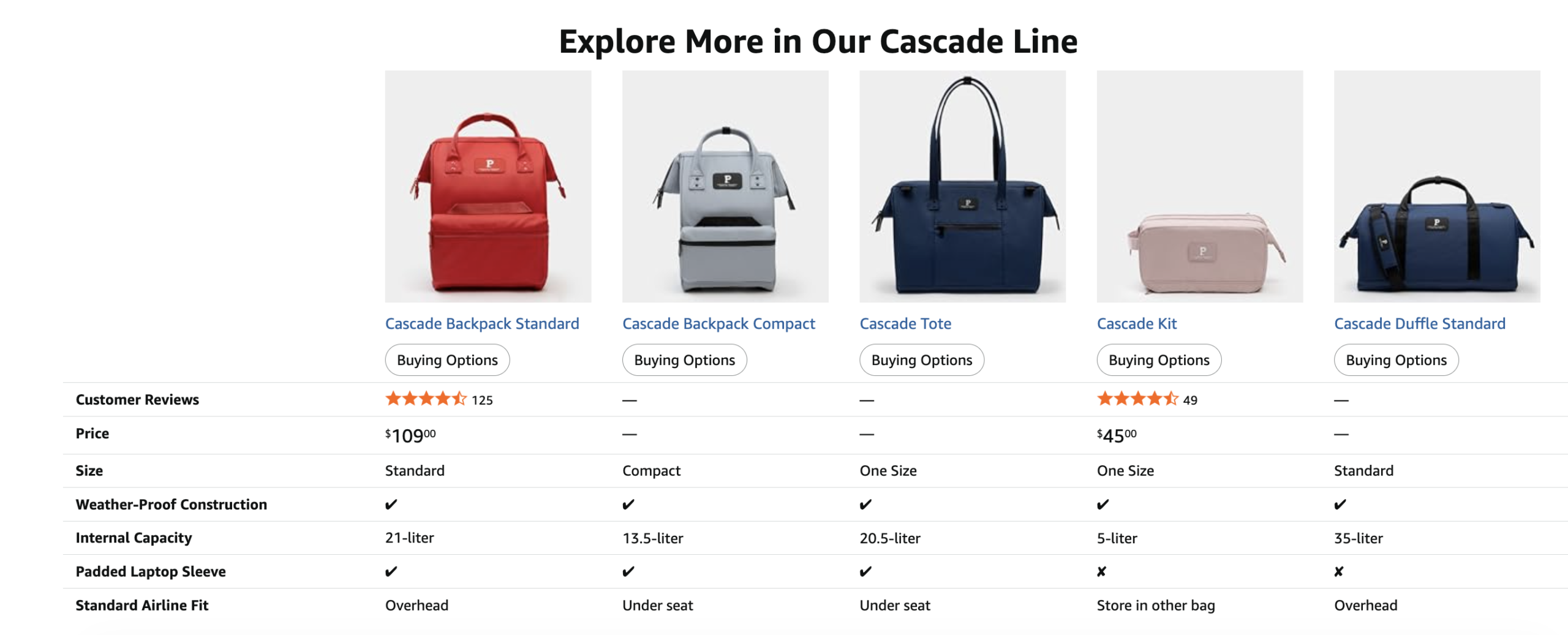
- Include at least 500 words of crawlable text along with descriptive alt-text for all images to give the AI as much context as possible. AI crawlers index live text to generate summaries, with baked-in image text prioritized less often. Depending on your catalog size, using the Comparison Table module is a good place to start.
- AI shopping agents scrape comparison modules to answer comparative user queries and generate dynamic comparison tables on demand.
- Use the exact phrasing from top positive reviews in A+ Content text and image alt-text, as LLMs use natural language to match shopper queries.
- Ensure context-rich alt text communicates use cases and product features that map to shopper queries. Do not stuff them with keywords as Amazon is moving toward natural language processing and will down-rate images that do not meet this new standard.
- A+ Content alt-text is also used for off-site LLM searches and on-PDP searches to verify feature claims. So making claims in your alt-text that are unverifiable off-site will not help your products win the search attribution game.
Brand Story & Brand Store
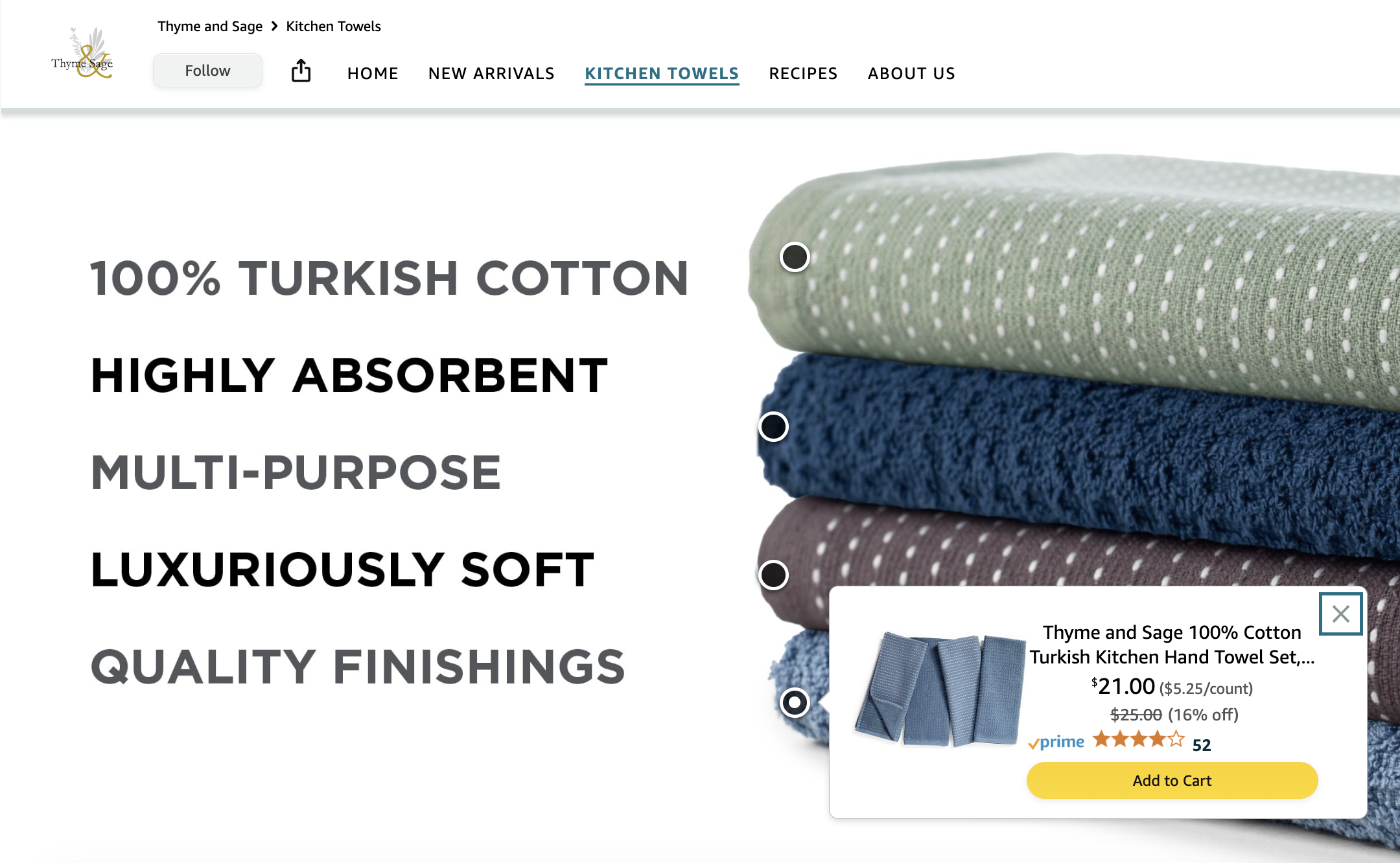
- Format the Brand Story as a cross-selling engine using the 4x ASIN modules to link to the storefront and sibling products.
- Highlight objective trust signals and certifications, which are increasingly used by AI to filter products based on value-driven prompts.
- Focus entirely on the immediate value proposition and consumer-centric mission rather than a lengthy corporate history.
- Stores utilizing interactive modules can see a 42% increase in “Time on Store” compared to static layouts.
- Brands optimizing stores with high-quality creative and strategic navigation that shoppers can easily intuit see a 35% increase in attributed sales per visitor.
Looking Ahead: The Shift to Agentic Commerce
The days of traditional search-based shopping are quickly making way for AI-driven buying. As shoppers increasingly hand over the reins to AI assistants to do the heavy lifting of researching, comparing, and even buying products for them—like Amazon’s Alexa for Shopping or OpenAI Operator—brands have to continuously keep ahead of these changes to ensure their products stay visible and relevant to LLMs and shoppers alike.
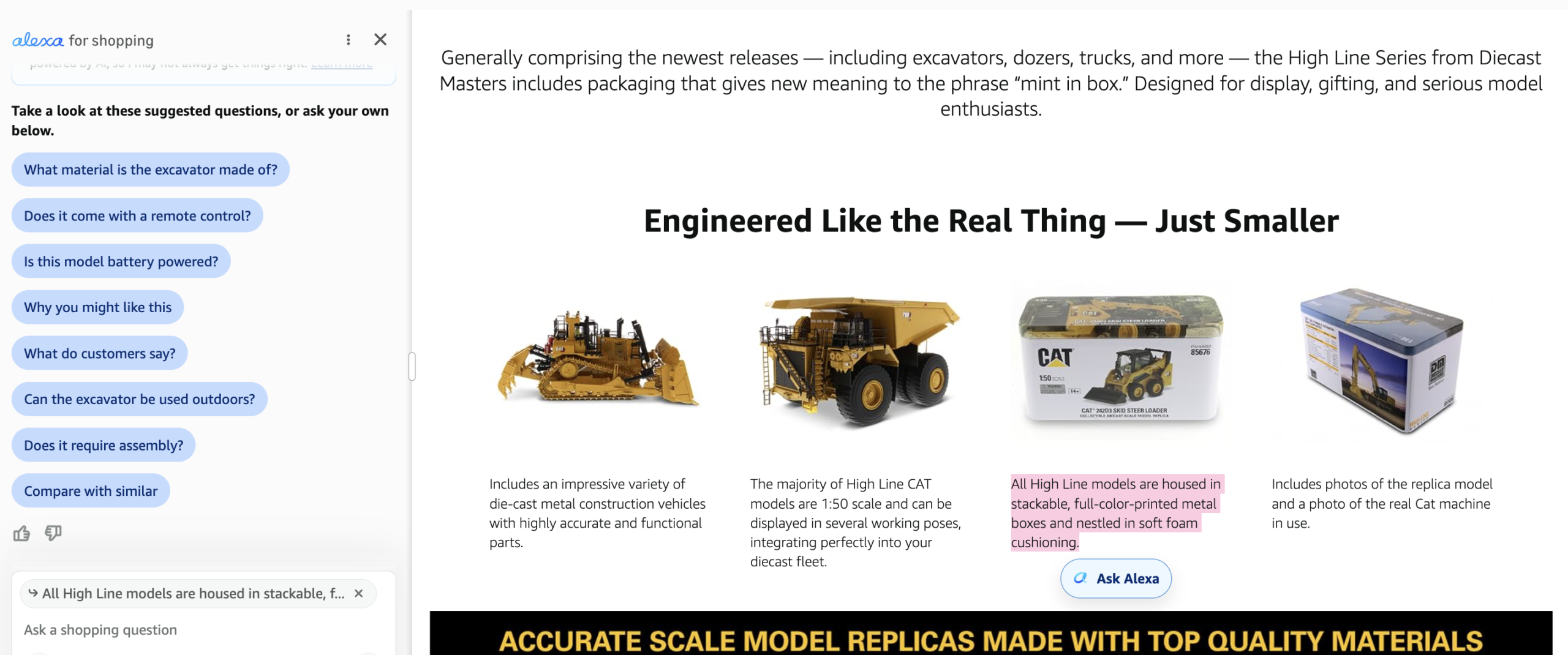
We’re entering the era of Machine-to-Machine (M2M) commerce. The traditional path of a human browsing to buy is being replaced by AI agents interacting directly with platform algorithms. The agent AI rapidly scans your structured data across multiple channels to cross-check claims, parse the code, and scan images to filter through the noise before their human operator ever sees a result.
Making your visuals “machine-readable” to earn AI’s trust is just the beginning. As we move deeper into Generative Engine Optimization (GEO), things like clear typography, precise visual context, and structured product data—verifiable across multiple sources—are the new non-negotiables for getting your products seen.
One final thing to keep in mind: this field is rapidly evolving. The rules governing how AI reads and ranks your content shift regularly, sometimes daily or even hourly. As these AI models get smarter and platforms roll out new constraints, today’s best practices will change. That’s inevitable. So, to keep pace, you must start seeing your digital merchandising as a living, breathing data feed across your entire omnichannel presence. This is the new reality for ecommerce brands, and adapting is the only way to stay visible and competitive, regardless of who—or what—is hitting the “buy” button.