Article
Walmart Marketplace Makes Strides: 2026 Seller Summit Updates
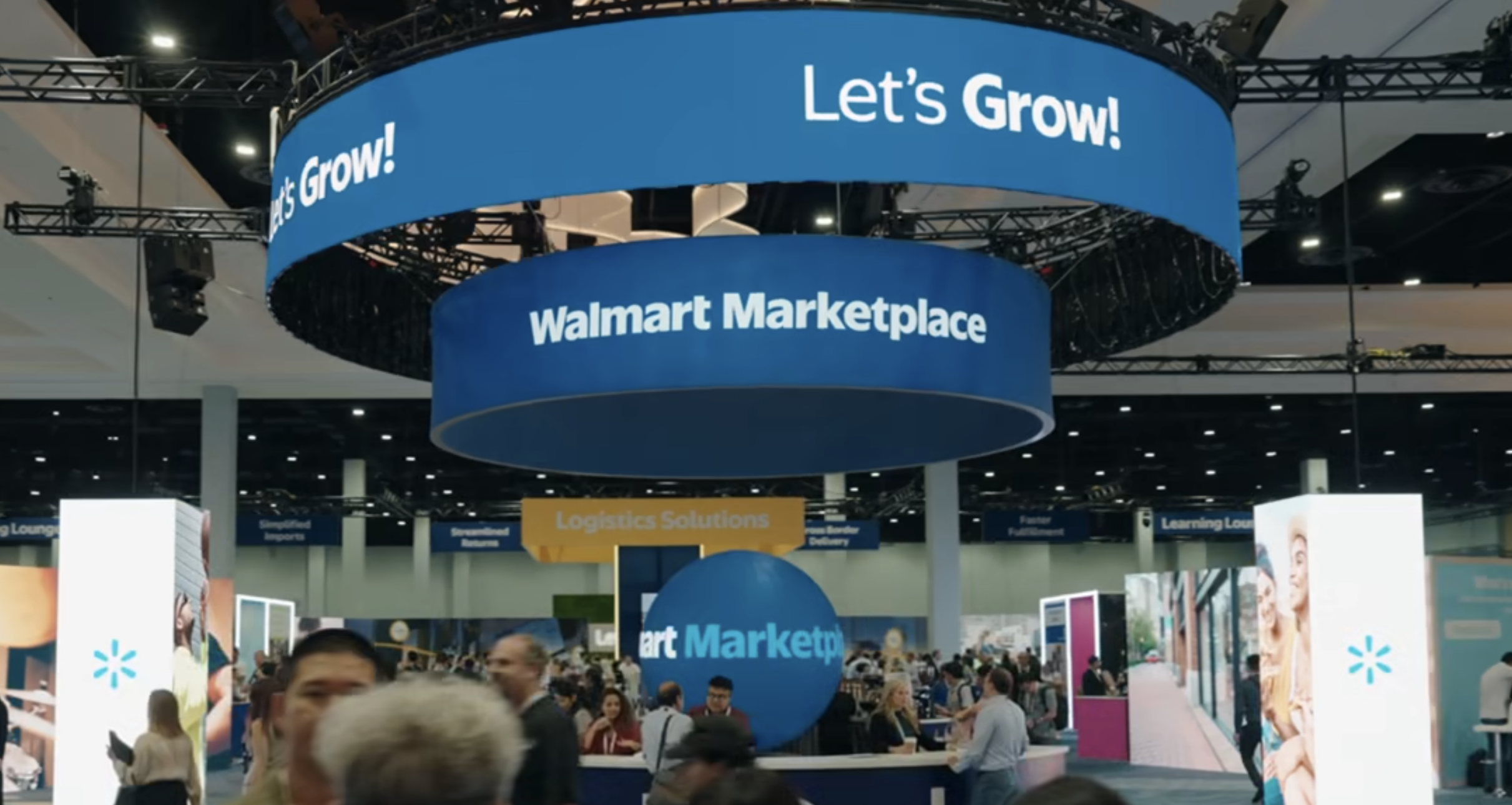
Walmart marketplace has changed considerably over the past few years, and the updates coming out of the 2026 “Let’s Grow!” Seller Summit suggest that evolution is accelerating.
This year’s summit highlighted new and expanding Walmart marketplace capabilities across digital merchandising, advertising, artificial intelligence, and fulfillment.
For brands, the bigger story is not the individual announcements but that Walmart continues to make strides toward offering a better experience for brands selling on its marketplace. This is particularly encouraging for premium brands. Historically, brands considering expansion beyond Amazon marketplace have needed to carefully evaluate whether Walmart could provide the merchandising environment, advertising capabilities, and overall customer experience necessary to properly communicate the value of higher-end products. Expansion fit still depends on factors like category, customer overlap, margins, assortment, pricing, and operational capabilities, but Walmart is addressing some of the previous limitations that made the decision to expand to its marketplace more difficult.
The following new and expanding capabilities give brands more control over how their products are presented, new ways to reconnect with interested shoppers, increasingly sophisticated AI-driven discovery, and greater access to Walmart’s fulfillment infrastructure.
“Brand Highlights” Give Brands More Room to Communicate Value
 The most impactful merchandising development from the 2026 Seller Summit is Walmart’s rollout of Brand Highlights which gives marketplace sellers more space below the fold to implement branded imagery, video, and text. This addition mirrors Amazon marketplace’s A+ Content.
For premium brands, this additional real estate on every listing page is extremely valuable. Higher-priced products often require more explanation encompassing materials, craftsmanship, technical capabilities, warranties, performance benefits, product comparisons, and use cases. This is a huge step toward Walmart offering brands a more sophisticated digital merchandising environment.
Walmart’s Re-Engagement Campaigns Create New Marketplace Advertising Opportunities
The most notable advertising development from the Seller Summit was Walmart Connect’s pilot of re-engagement campaigns which allows brands to target previously-engaged shoppers. This addition fills a notable gap that previously existed in Walmart’s advertising options for its marketplace sellers. Going beyond generating discovery and capturing existing shopping intent, re-engagement campaigns create an opportunity for brands to return to someone who has already demonstrated interest.
For higher-priced products in categories with significant search demand (such as an all natural household cleaner), this addition is particularly valuable. Some conversions will not happen during the first listing page visit with many lower-priced competitors also available to purchase from. A shopper might leave to compare alternatives, discuss the purchase with someone else, wait for products to go on sale, or simply hesitate before making the decision. Thanks to the addition of re-engagement campaigns, this initial interaction does not have to be the end of that shopper’s journey with your products.
Walmart Connect has been making a broader push to reach shoppers beyond individual search queries. At the 2026 Seller Summit, Walmart also encouraged sellers to think about discovery across more of the customer journey. The company reported pairing Onsite Display with Sponsored Products could lead to a 45% median increase in ad-attributed sales from new-to-brand buyers compared with sellers running Sponsored Products alone.
What brands should watch: Monitor access to re-engagement capabilities and start identifying products with meaningful listing page traffic but longer consideration cycles or lower-than-expected conversion.
New Growth Incentives Page in Seller Center
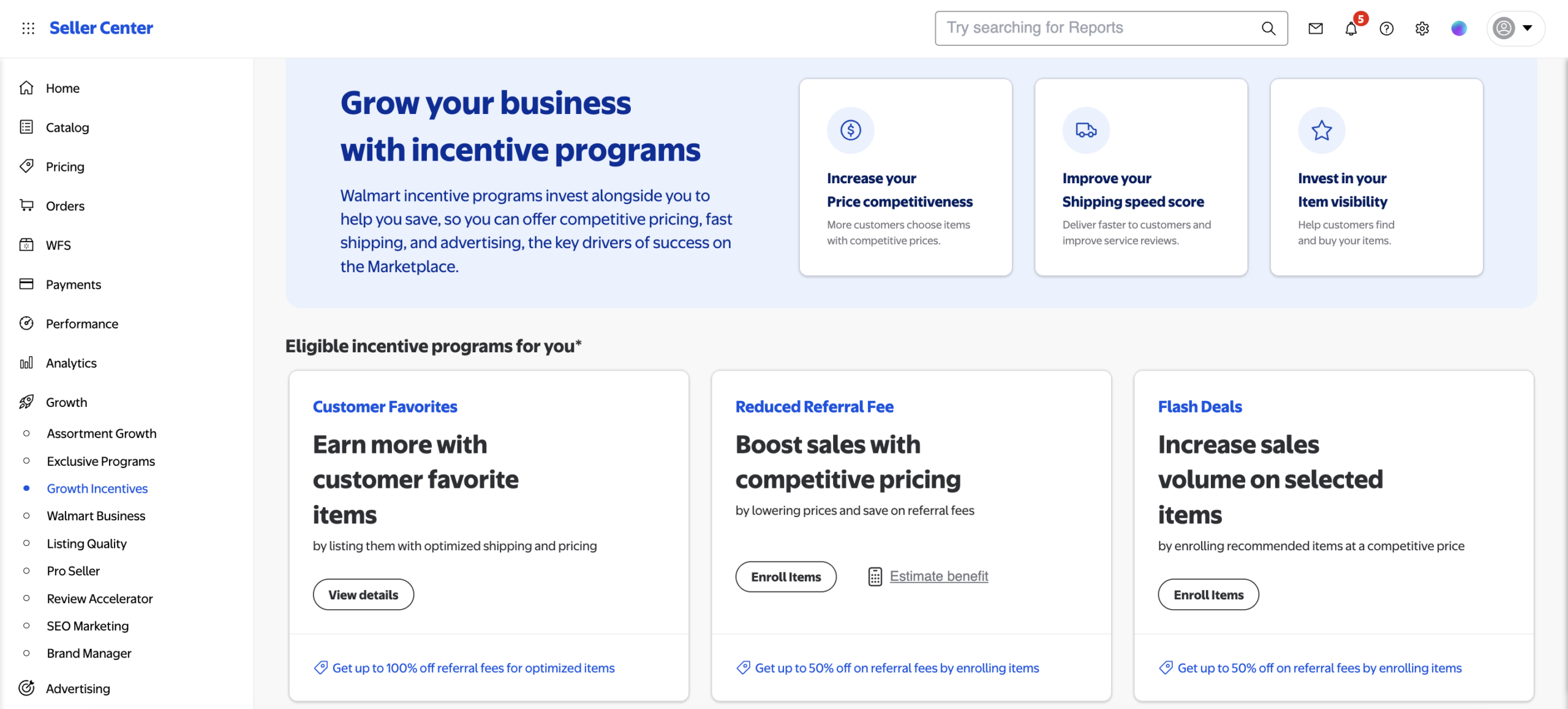
Updated in September 2026, Walmart’s Growth Incentives page shows sellers which programs they are currently eligible for, active programs if any, and incentives’ impact on GMV and savings. Opportunities include Customer Favorites, Flash Deals, Pro Listing Savings, Reduced Referral Fees, Walmart Funded Incentives, and New Seller Savings depending on seller eligibility. Learn More.
The Growing Role of Walmart Sparky for AI-Powered Product Discovery
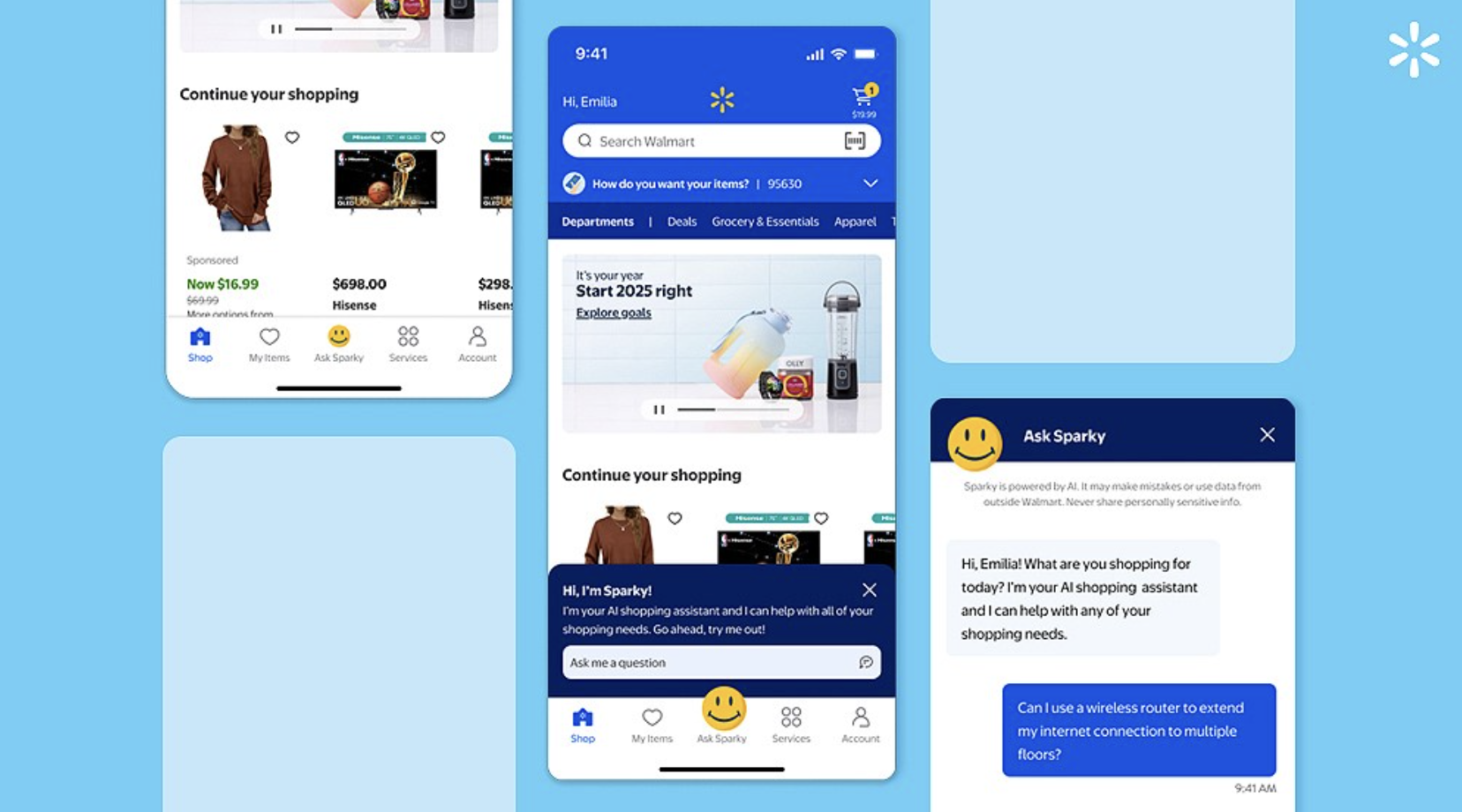
Sparky, Walmart’s customer-facing shopping assistant, is already helping customers find products, compare options, summarize reviews, and shop around broader needs or occasions rather than relying exclusively on individual keyword searches.
Instead of a new, major Sparky update announced at the Seller Summit, Walmart instead took the moment as an opportunity to reinforce how AI-powered shopping is becoming a bigger part of the Walmart customer experience.
Sparky came up repeatedly in summit conversations around discovery and listing quality. Attendees highlighted use cases beyond traditional keyword search, such as customers asking Sparky questions about what they need or even sharing an image and asking for relevant product recommendations. One attendee posted about how “Walmart shared that Sparky users spend 40% more on average, which makes strong, accurate listings even more important.”
Throughout 2026, Walmart has been expanding the role of AI across the shopping journey. This broader investment also includes Wallaby, Walmart’s family of proprietary retail-specific large language models. This proves that Walmart is investing not only in a customer-facing AI experience through Sparky, but also in retail-specific AI infrastructure designed to better understand products, customers, and shopping intent.
For brands, this shift begs the question of how products can stay visible in two different environments: traditional search, where keywords and established marketplace optimization practices remain important, and conversational discovery, where an AI assistant is trying to determine whether a product actually meets a shopper’s particular need.
Now, shoppers may ask for the best option for their upcoming trip, a project they’re working on, a gift for a certain recipient, a solution to a specific problem, or something that fits their given set of requirements. For an AI system to confidently connect a product to these needs, it requires a clear understanding of what each product is, what it does, who it is for, and how it differs from other options available on the marketplace.
Walmart has already shared how it uses AI to interpret product information at scale by analyzing product descriptions and imagery to extract and validate attributes such as color, size, materials, and other product characteristics across its catalog. Walmart says this work helps create a more reliable product-data foundation and improve the shopping and search experience.
This does not mean brands should abandon established Walmart SEO practices or start rewriting listings around speculative AI ranking factors. Instead, brands should view AI-readiness as an extension of strong digital merchandising:
- Accurate and complete attributes
- Clear customer-centric descriptions
- Useful specifications
- High-quality imagery
- Explicit explanations of use cases and differentiation
What brands should think about now: If a shopper — or an AI assistant on a shopper’s behalf — were trying to determine whether your product was the right choice, does your listing provide enough information to understand it exactly?
Walmart Prioritizes Making Its Marketplace a Better Fit for Premium Brands
These announcements made at the 2026 Walmart Seller Summit address various parts of the customer experience, which matters for premium brands on the platform or considering expansion. We’ve seen that higher-end products benefit from environments where they can explain differentiation, answer complex customer questions, and provide an experience that feels consistent with the quality of the brand itself. Walmart is continuing to say, “We’re in this ecommerce marketplace race, we listen to our sellers and customers, and we want to offer the best experience we can.”
That said, category fit, competitive dynamics, pricing, profitability, operations, customer overlap, and assortment still matter for brands who truly want to succeed on Walmart, but brands who may have evaluated fit a while ago and decided not to move forward at the time, may want to revisit that decision now.
For brands already selling on Walmart marketplace, the takeaway is similar: look beyond traditional strategies and explore what these new features make possible.
At Brandwoven, we view Walmart marketplace management as more than simply launching listings or running ads. Digital merchandising, catalog operations, fulfillment, demand planning, and marketing strategy all influence the experience a customer ultimately receives, and whether brands find true value from being on the platform. As an approved Walmart Marketplace Solution Provider, we provide consulting and full-service account management for brands on Walmart marketplace.
As Walmart continues to improve the experiences it offers to sellers on its marketplace, we’ll be keeping a close eye on what advancements come next.