Amazon held its two biggest conferences of the year a week apart this fall. Accelerate brought sellers to Seattle in late September, and unBoxed brought advertisers to San Francisco the following week.
The message at both events was the same: Amazon’s AI can analyze your account, recommend changes, and then make them for you.
Over the last year, Amazon has continued expanding AI across its marketplace, making the ways that sellers test and rely on these tools increasingly important. What we’ve generally seen in our client accounts is that Amazon’s AI is strong at diagnosing problems and drafting fixes, but still needs experienced people making strategic calls.
Overview of Key Announcements
| Announcement | What It Is | Status | Brandwoven’s Take |
|---|---|---|---|
| Seller Assistant upgrades (memory & workflows) | AI that monitors your business, recommends changes, and can act with your approval | Available in the new Seller Central | Great for diagnosing problems, but verify before letting it act on your behalf |
| Amazon Quick Plus | Amazon’s AI workspace for documents, research, and emails | Free for 12 months if you sign up by Dec. 31, 2026 | Claim before the deadline |
| Selling partner plugin | Connects your Seller Central data to Amazon Quick and Claude | Beta | Promising, but our first connection attempt resulted in the waitlist. |
| Amazon Ads Agent (expanded) | Introduced in 2025; now adds a chat assistant for planning and optimizing campaigns | Expanded closed beta | Faster analysis. Brands still set the goals and campaign structure. |
| Full-Funnel Campaigns (expanded) | First introduced in 2025; now one AI-managed campaign across sponsored ads, display, video, and streaming TV | Open beta | Test alongside your structured campaigns (not instead of them) |
| DVA+ | Display, video, and audio in a single campaign | Closed beta | Most brands don’t have access yet. Keep current display and DSP campaigns running, and test once it opens. |
| Review Requests | Ads that invite recent buyers to rate or review products | Open beta starting late October, with launch in November | Very promising; strong fit for new product launches |
| Branded Conversations | A brand-written brief that informs Alexa for Shopping conversations | January 2027 (US) | Make sure your catalog data is complete and up-to-date which will make writing the brief much easier. |
| Multichannel dashboard | Manage eBay, Shopify, TikTok, and Walmart orders and listings from within Amazon Seller Central | Gradual US rollout | Useful cross-channel visibility, but not necessarily a reason to invest in secondary channels. |
| Product Opportunity Explorer (new features) | Amazon’s existing research tool now compares new product ideas against real customer signals | Idea testing is live, with launch plans coming soon | Worth testing, but only treat AI’s feedback as a starting suggestion. |
| Global selling tools | See where your products are in demand abroad, pool inventory across 8 countries, and certify for multiple countries with one submission | Rolling out; inventory pool by end of 2026 | Confirm demand before committing to a new market. |
| AI creative tools | Display and video ads generated from your product assets | Within the Ads Agent chat beta | Fast first drafts, but keep a human in the loop for creative review. |
| Sponsored Services | Local service providers (via Yelp) surfaced to shoppers after purchase | Rolling out (no specific date announced) | Niche, but relevant for products that need installation |
When Amazon’s New AI Tools Roll Out
Amazon was vague about rollout dates for most of these updates. In our experience, Amazon rarely launches big changes right before peak events because there’s too much risk of something going sideways. Expect much of this to arrive through the end of the year and into everyday use in 2027.
For Black Friday and Cyber Monday, plan on what’s live in your account today. Our peak season ads and inventory strategies still apply. The same goes for operations. Accurate Q4 demand planning will protect your holiday sales more than any new AI feature.
Amazon Seller Assistant Upgrades: Memory, Workflows, AI Integrations
This year’s announcements were the follow-through on promises Amazon made in 2025. At Accelerate 2025, Amazon introduced the agentic Seller Assistant to propose plans and take approved steps. The same is true on the advertising side. At unBoxed 2025, Amazon introduced Ads Agent, a unified Campaign Manager, and Full-funnel Campaigns. In 2026, all three leveled up with new features that make everyday use and reliance more realistic.
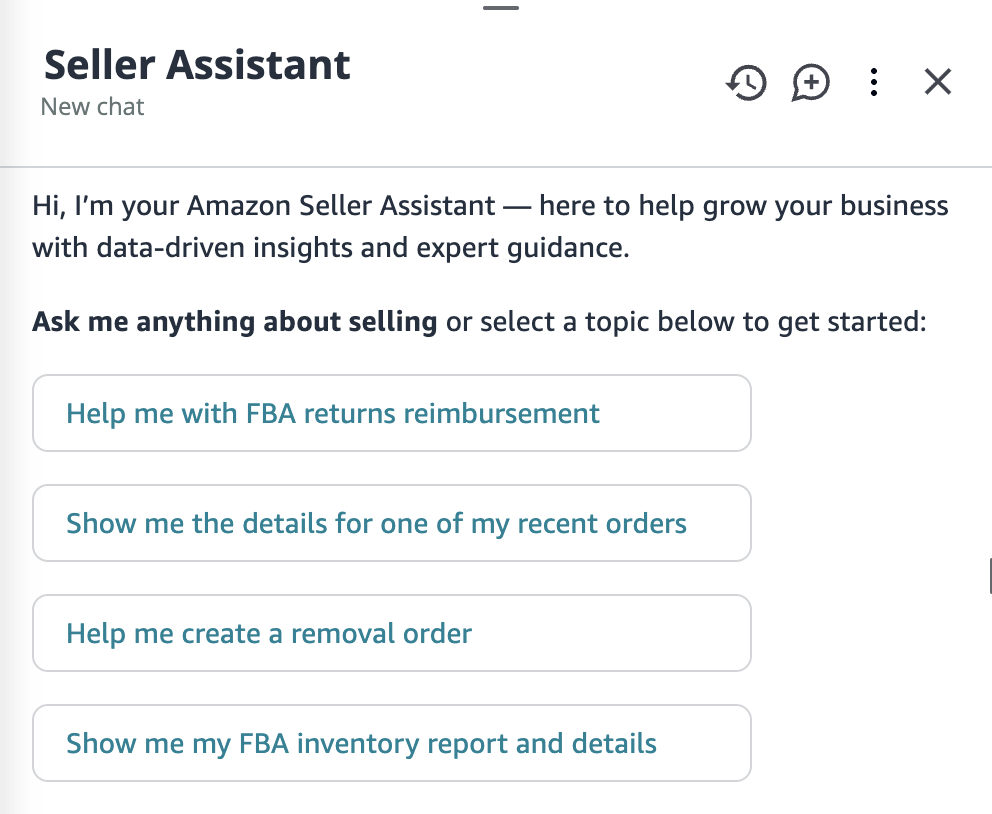
Seller Assistant now remembers your Amazon business. It carries persistent memory across Seller Central, sharing recommendations across areas like inventory and pricing, and is expected to sharpen responses as it learns more over time.
Seller Assistant can also run workflows around the clock. Describe a task, set guardrails, and choose whether Seller Assistant recommends what you should do or actually does it on your behalf. If the latter, every action is logged to make human monitoring easier.
Amazon is also opening Seller Central to outside AI tools for the first time. A new selling partner plugin connects your listings, performance, and analytics to Amazon Quick and Anthropic’s Claude (both in beta). Amazon initially said the connection was available to sellers immediately, but our team landed on a waitlist when trying to connect to it.
Vendors are getting an upgrade too. Vendor Central’s AI Vendor Assistant can now answer questions across 77 business metrics, from sales and traffic to inventory, at the ASIN, brand, and subcategory level. This is a helpful shortcut for 1P brands that otherwise would spend time tediously pulling reports.
Amazon Ads Console Upgraded as Ad Agent with DSP
At unBoxed, Amazon rebuilt its ad platform around a single agent.
Amazon is expanding its unified advertising experience, bringing sponsored ads and DSP capabilities closer together while introducing Ads Agent to help advertisers analyze performance, build campaigns, and streamline workflows.
The upgraded Amazon Ads Agent supports three campaign types:
- Sponsored ads
- Full-Funnel Campaigns
- DVA+ (display, video, and audio in one programmatic campaign, and “video” includes streaming TV)
A conversational assistant will sit across all of this (currently in closed beta).
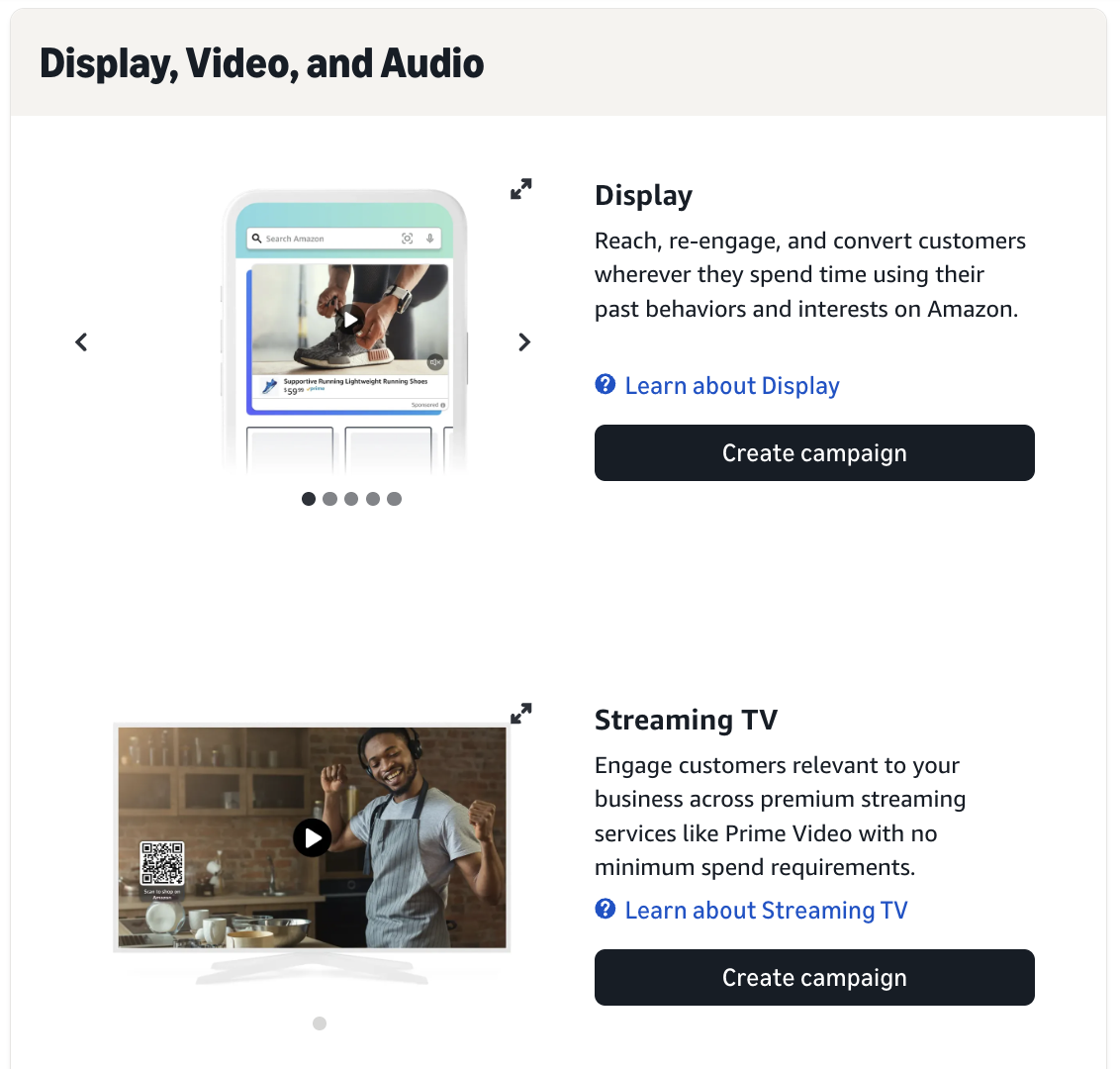
AI-Managed Full-Funnel Campaigns (From Sponsored Ads to Streaming TV)
Amazon introduced Full-Funnel Campaigns at unBoxed 2025, and this year it expanded them.
With Full-Funnel Campaigns, you set a goal and Amazon’s AI handles everything else:
- Channel mix
- Creative
- Audience targeting
- Optimization across sponsored ads, display, video, and streaming TV
Amazon reports beta testers saw 67% higher long-term ROAS and 29% lower cost to acquire new-to-brand customers.
Our recommendation: test Full-Funnel Campaigns alongside your structured campaigns, not instead of them, because AI-managed campaigns don’t separate spend by strategy or KPI. That still takes a marketer deciding which KPIs matter for each goal and manually structuring campaigns around them.
Amazon Review Requests: How to Get More Reviews on New Products
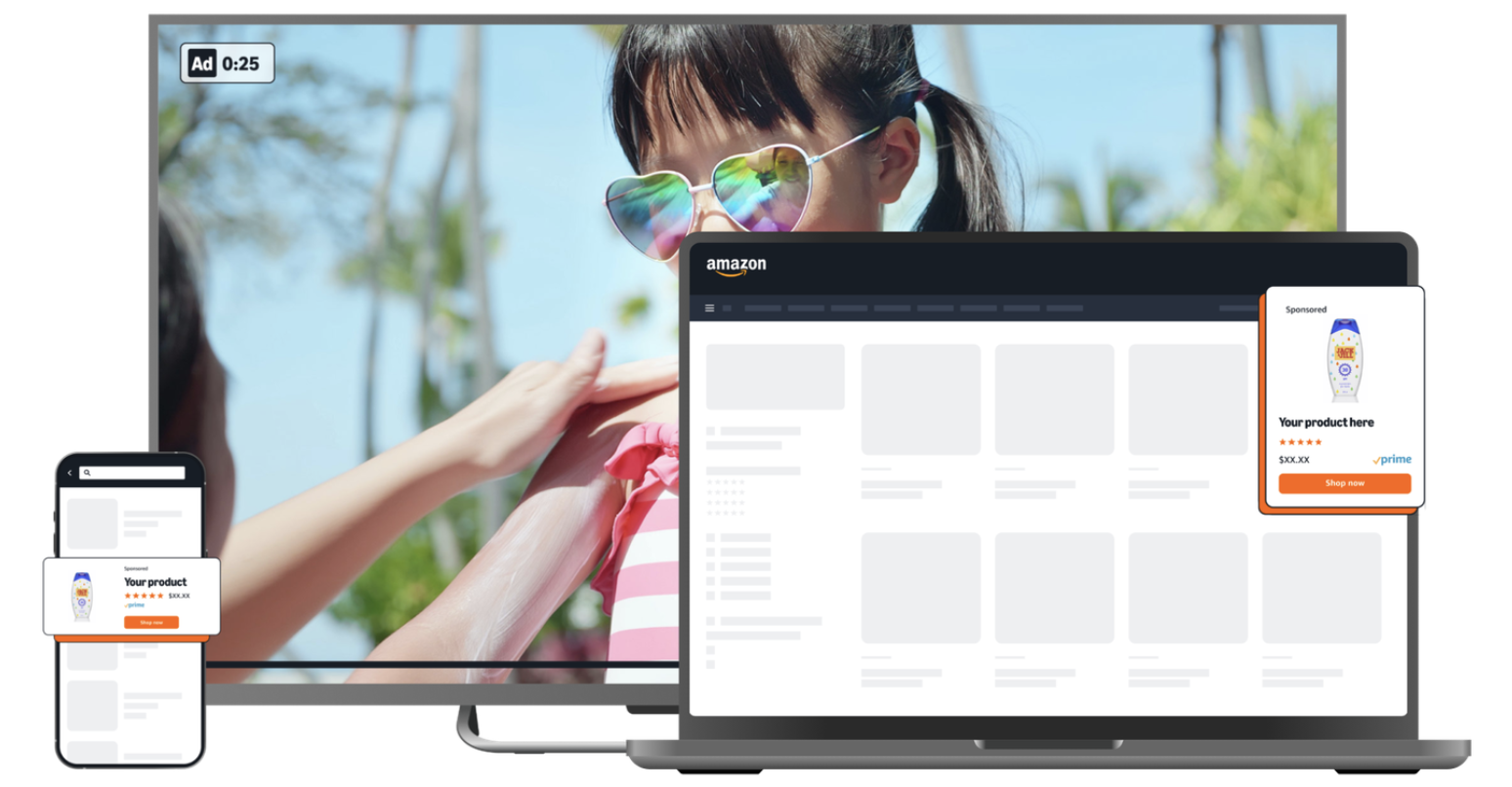
Review Requests are ads that invite customers who recently bought your product to leave a star rating or review. Products with <1,000 total ratings and reviews qualify (once this threshold is hit, campaigns pause automatically). Amazon is opening beta testing in late October with a broader launch set for November.
Amazon reports that products in its June 2026 closed beta received about three times as many ratings and reviews per week. This could be huge because building reviews is a relatively slow process (we estimate shoppers only leave reviews on about 1–4% of Amazon purchases).
There’s a fair question here, and our team asked it right away: isn’t this paying for reviews? Amazon’s review guidelines prohibit paying for reviews.
Review Requests is different. Sellers pay for the placement of an invitation to verified buyers, not for the review itself or its rating.
One of our largest brand partners is launching hundreds of new products this fall, and testing Review Requests to build ratings faster might be the perfect solution. Our client service team is really excited about testing this update!
How to Show Up in Alexa for Shopping Conversations
Branded Conversations is the next evolution of Sponsored Brands prompts. Brands supply their own expertise, such as what sets their products apart and how they work together, and Alexa for Shopping (formerly Rufus) can reference it in conversations with shoppers. Amazon says nearly 20% of shoppers who interact with a Sponsored Brands prompt continue the conversation about that brand. Branded Conversations is designed to keep the brand in the conversation after that first click. It is set to launch in the US in January 2027.
In practice, brands will fill out a brief covering what makes them unique and their key selling points. That makes it catalog work as much as advertising work; the brief only helps if it matches what’s on your product pages. Alexa for Shopping already reads your titles, bullets, A+ Content, reviews, and Q&As to decide whether to recommend a product. If those pages aren’t ready, improving your visibility in Alexa for Shopping should come before writing the brief.
Amazon Multichannel Selling Tools: Manage Walmart, Shopify, eBay, TikTok in Seller Central
New multichannel selling tools let sellers connect eBay, Shopify, TikTok, and Walmart accounts to Seller Central. You can import and link listings, view orders, and handle fulfillment across channels for easy management. The tools are rolling out gradually to US sellers and build on last year’s Multi-Channel Fulfillment announcements.
You might be thinking, “why would Amazon let me manage Walmart from inside Seller Central?” Amazon wants brands thinking full funnel and omnichannel. A shopper might discover a product on TikTok, but not trust TikTok Shop or want to set up an account, so they search for that same product, and purchase it, on Amazon instead. This discovery path is growing. As we noted in our “Should You Sell on TikTok Shop?” article, 1 in 10 online shoppers now start product searches on TikTok.
There’s a business angle, too. As eMarketer points out, a seller managing Walmart or Shopify orders inside Seller Central is one step closer to using Amazon to fulfill them.
Multichannel visibility is worth watching because it can reveal white space on less competitive channels, but it isn’t a reason to overinvest in them. In our team’s experience, a typical marketplace split looks like 90% Amazon, 5% Walmart, and 3% Target. Amazon is still the dominant marketplace for most brands, but seeing cross-channel performance in one place could make expansion feel easier, or at least more effective for brands already selling on multiple channels.
Using Amazon’s AI for New Product Research: What Works & What Doesn’t
Amazon’s latest Product Opportunity Explorer updates let you bring a product idea and test it against real customer purchase signals before you manufacture anything. Amazon says sellers who use Opportunity Explorer before launch see twice the sales in their first 3 months, and a personalized 90-day launch plan is coming soon.
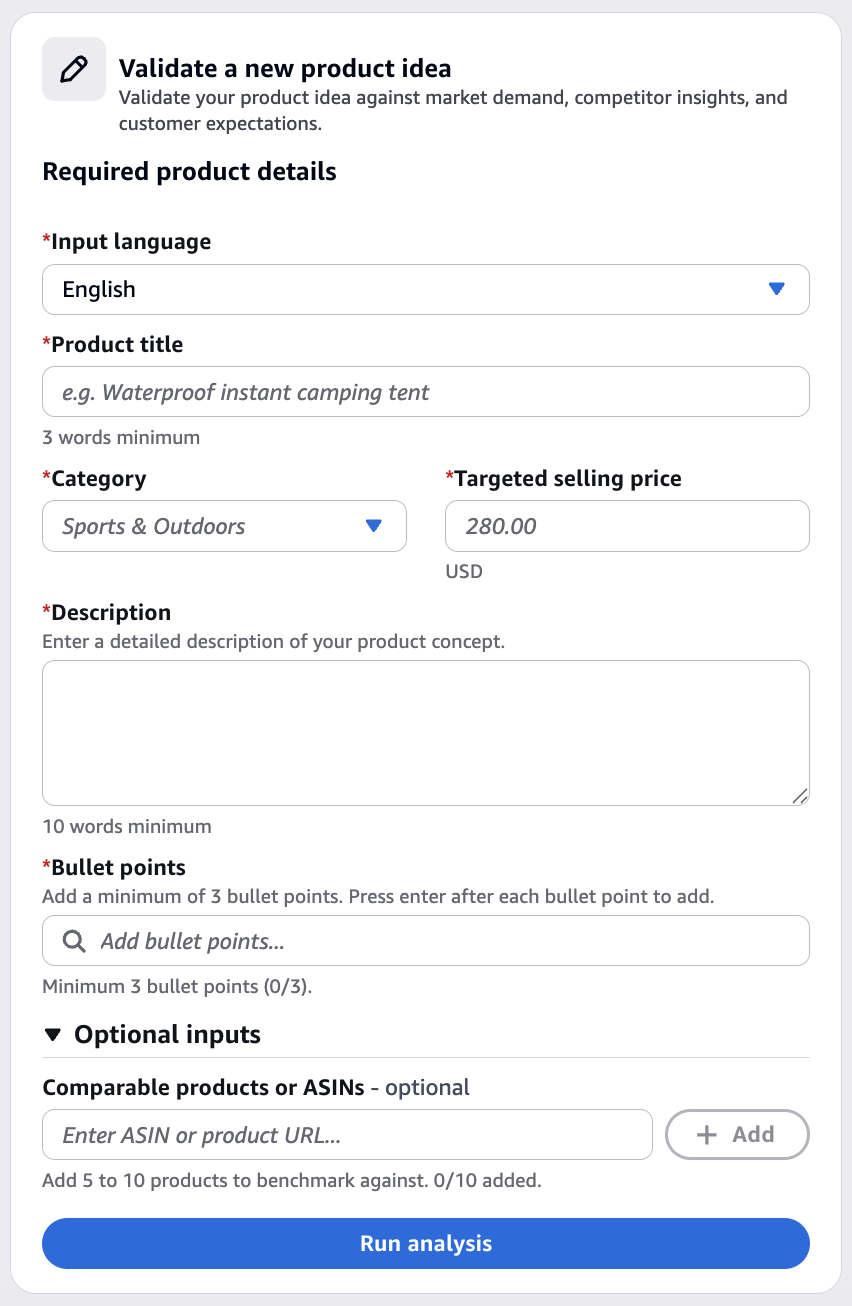
Opportunity Explorer will start surfacing product ideas in the coming months, and Seller Assistant can already answer questions like which products may surge in demand. One brand we work with was especially interested in using these tools to expand its assortment. However, when we tested Amazon’s AI product suggestions ourselves, the reasoning was way off:
- For a brand selling a pest-control product, it suggested a large animal trap.
- For a brand selling carpet refresher, it suggested selling carpet.
Both examples are the AI thinking in reverse, and neither would make sense as a brand expansion.
This isn’t to say the suggestion feature is broken. Recommendations will likely improve as these tools learn more about each business and category.
That said, if you’re going to use it right now, we’d strongly recommend treating the AI suggestions as a starting list to consider, not a trustworthy expansion strategy.
Amazon Global Selling Tools Make International Expansion Easier
Amazon is also making international expansion easier. It says sellers active in more than one country earn 70% more revenue on average, and its new global selling tools target three of the biggest barriers:
- Knowing where to launch
- Managing inventory across countries
- Meeting each country’s compliance requirements
Sellers can see where their products are in demand and what it takes to launch. New category-level features also let one test submission satisfy certification requirements in multiple countries.
If expansion is on your 2027 roadmap, start with demand: confirm where your products already have interest before committing to a new market. Our international expansion team can help you decide which markets are worth exploring.
Generating Display and Video Ads in Ads Agent
Amazon already offers Creative Agent, a chat-based creative assistant in Creative Studio. Building on that, generative AI creative tools now also live inside the Ads Agent chat experience, generating display and video ads from your existing product assets. Amazon reports up to 71% more product coverage and up to 15% sales growth for advertisers using them.
Relying on fast first drafts is compelling, and many creative teams already use generative AI as a production tool. However, AI-generated creative still needs human review before it’s pushed live – especially when considering factors like Amazon’s guidelines and compliance.
Before publishing AI-generated assets, check that they:
- Follow Amazon’s disclosure rules for fully AI-generated people
- Can be easily understood by both AI shoppers and human ones
- Stay on brand and accurately represent the product(s)
How AI Fits Into Marketplace Management
In our experience using AI to analyze accounts and make recommendations, it gets about 60–70% of the way there. The gap is the full picture: AI doesn’t know everything about a brand’s goals, or really anything that is going on outside of the account, which can lead to poor recommendations and hallucinations.
We compare where AI is today to being in middle school; it’s in an awkward stage, growing fast, and not ready to be trusted on its own.
Using Seller Assistant to Diagnose Conversion Rate Problems
One of the best examples of how to get the most out of Amazon’s AI came from an Accelerate presentation: If a product’s conversion rate drops, Seller Assistant can work out whether the problem is traffic or the product detail page. If advertising is doing its job and content is the issue, it can draft specific PDP updates for review, or publish them immediately.
This capability is useful for advertising and content teams. When used effectively, it can shorten the time between spotting a problem, knowing what needs to be fixed, and pushing the revisions through.
Where Amazon’s AI Falls Short: Advertising Strategy & Campaign Structure
AI-managed campaigns are one example where human judgment still matters. Amazon has offered this AI-powered ads solution for a while:
- Give AI a budget
- Decide on your ROAS goal
- Select which ASINs to promote
For new sellers with little advertising experience, AI can provide a pretty reasonable starting point. For advanced advertisers, however, it won’t separate campaigns by strategy (incremental, branded, or competitor) or segment keywords by initiative. That granularity matters if a brand has different goals for different ASINs (each goal might have various metrics that need paying attention to). For example, in our Prime Big Deal Days advertising guide, we outlined a few different event strategies:
- Boost a single product
- Grow market share
- Upsell loyal customers
Each of these optimizes for different KPIs, from BSR and conversion rate to share of voice and AOV. An AI given a budget and one ROAS target won’t be able to distinguish against these strategies or prioritize the best fit one. We’ve also seen that ROAS alone can mislead brands if margins vary significantly by ASIN. This is just another example of how completely relying on AI will prevent crucial context from entering the conversation, potentially swaying your brand in the wrong direction (which can waste ad spend without generating conversions).
How to Avoid Getting Overwhelmed by Amazon’s New AI Features
Part of the challenge is volume. Amazon released so many AI capabilities at once that it’s hard to know where to begin, and we heard the same from other attendees. Our advice mirrors how we approach Amazon Marketing Cloud; start with one simple question you’re trying to answer, then work backward to the tool that answers it. Trying every new feature at once usually means making significant progress on none of them.
Human-First, AI-Assisted: How Brandwoven Uses AI for Amazon Brands
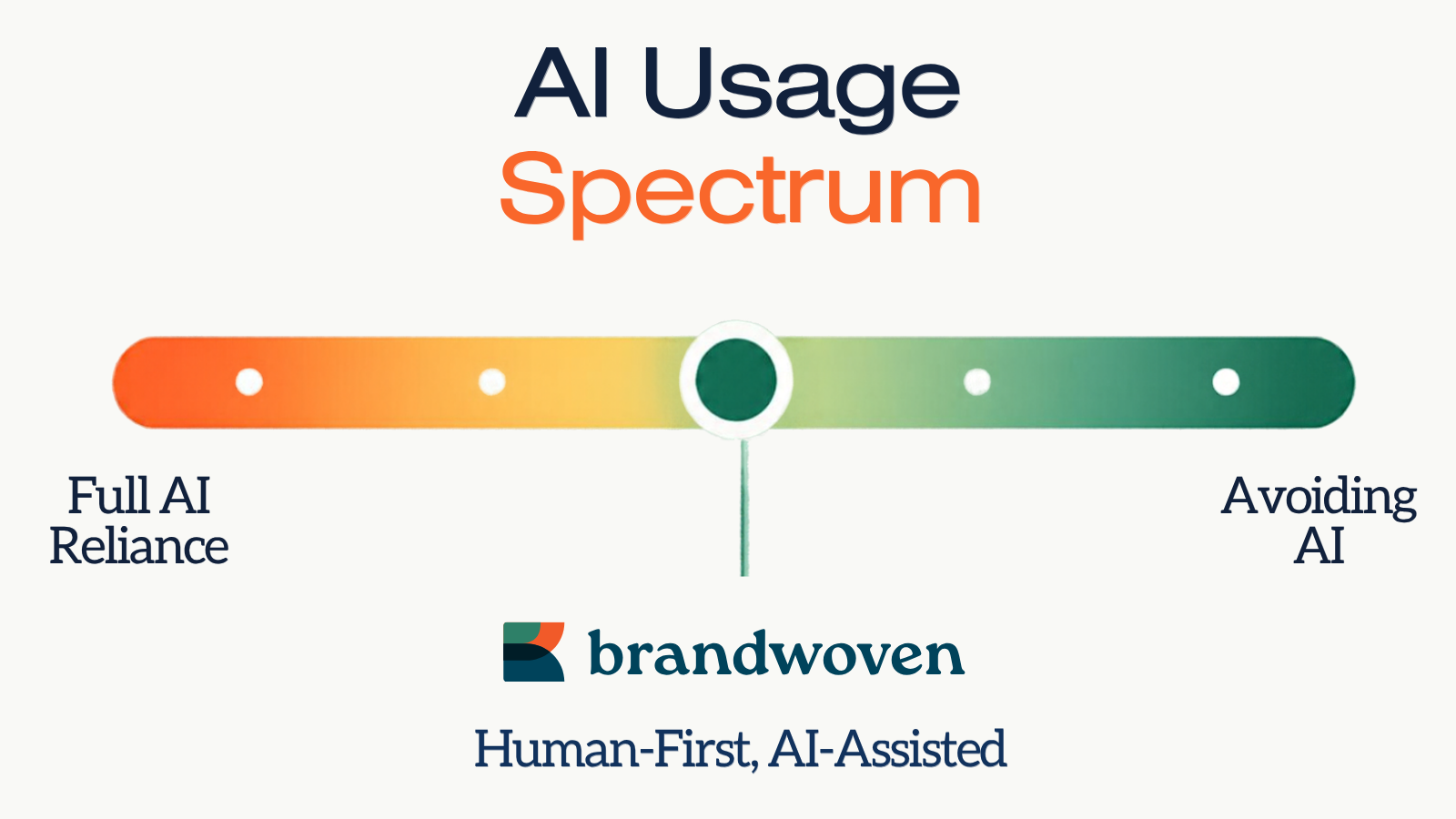
Agencies are landing all over the map on AI. At one end, some are going so AI-first that their clients rarely talk to a human. At the other, some are avoiding AI altogether. At Brandwoven, we sit in the middle. We believe that AI is a necessary and important tool, and we use it every day – but we’re wary of taking what it says at face value. This is the same stance we took in our 2025 guide to Amazon’s AI tools, and the answer we gave to a supplement client who recently asked about our view on the “AI takeover”: treat AI as a co-pilot, not a pilot.
The truth is, we’re not going to be an AI-first agency. We use AI to pull data, analyze it, and make recommendations, but rely on our team with decades of real-world experience to make the calls on whether those recommendations are right.
Internally, we hold ourselves to the same level. We know that efficiency matters, and we’ll continue to invest in AI training and tools for our team. In fact, our company’s annual retreat this October largely focused on AI, data, tools, efficiency, and where our company is headed in 2027. That said, we are not – and never will be – an operational chop shop that trades custom, high-touch partnerships for increased output. Our clients partner with us for premium service and a custom approach, so we prioritize human-first, AI-assisted strategies.
We also think about AI use as a progression. Beginners write prompts, intermediate users build reusable skills, and advanced users layer automation on top of both. The brands that make real progress are doing the same (starting with the basics and working their way up). Plus, we know just how much time it can take to test all of these new tools at once, which is why many of our partners have leaned on us for experimentation and capability expansion.
What Amazon’s AI Push Means for Brands in 2027 & Beyond
Amazon wants to be the operating system for a brand’s entire ecommerce business. Outside AI tools now plug into Seller Central, rival marketplaces can be managed from inside it, and ad buying is consolidating into a single agent.
The reach extends past products, too. Sponsored Services connects shoppers with local service providers after a purchase through Yelp. Think of a water heater brand whose customers need a professional installer.
As agents take on more execution, brand differentiation on the marketplace will increasingly rely on inputs like your brief, catalog data, and creative assets. This is the same core idea behind Amazon GEO: give AI accurate, complete information to understand your brand, and work off of.
Our prediction: brands that try to automate everything won’t see the best results; the brands that use AI for efficient analysis but keep people in charge of strategy and key decisions will have the most success.
Put Amazon’s New AI Tools to Work
Amazon’s new tools are powerful, and they work best with someone deciding where automation helps and where human judgment needs to stay in charge.
If your brand is eager to try these new tools but needs a partner to help draw the line between automation and human oversight, our operations team would love to help.