Introduction
Amazon has already published this year’s peak season deadlines for inventory shipments and deal submissions, and the earliest ones are already here. The brands that end the year with strong sales are relying on months of groundwork. Right now, the decisions that will determine your December performance are being made: inventory commitments, budget plans, and creative decisions.
Last year, our brands ended 2025 with an exceptional ad performance—one that was only possible due to cross-functional planning far in advance and quick pivots where needed. Now, we’re sharing what work was completed in Q1-Q3 to prepare our Amazon brands for Q4 advertising success. Steal our playbook and watch the results reel in for yourself.
The Evidence: December 2025 Wins from Our Brand Portfolio
Strong Amazon ad performance means high efficiency: making ad dollars word harder to drive sales growth.
Here’s how we targeted shoppers at each stage of the funnel, and theQ4 brand wins that our Amazon ad strategies resulted in.
Top of Funnel: Better Traffic, Not More Traffic
Over the past year, we’ve seen fewer brand impressions and more competitors fighting for shoppers’ eyes and dollars across many categories on Amazon marketplace.
To maintain efficiency, our ad strategy was focused on refinement. Our goal was not to reach as many shoppers as possible, but be strategic with which shoppers were targeted, and were more likely to convert. This looked like:
- Using tools like AMC to target custom audiences
- Leveraging smart promotional tactics like Subscribe & Save on consumable products
- Running Brand Tailored Promotions for audiences that already expressed interest
Our approach was: work smarter, not harder.
The results across our managed brands in December ‘25:
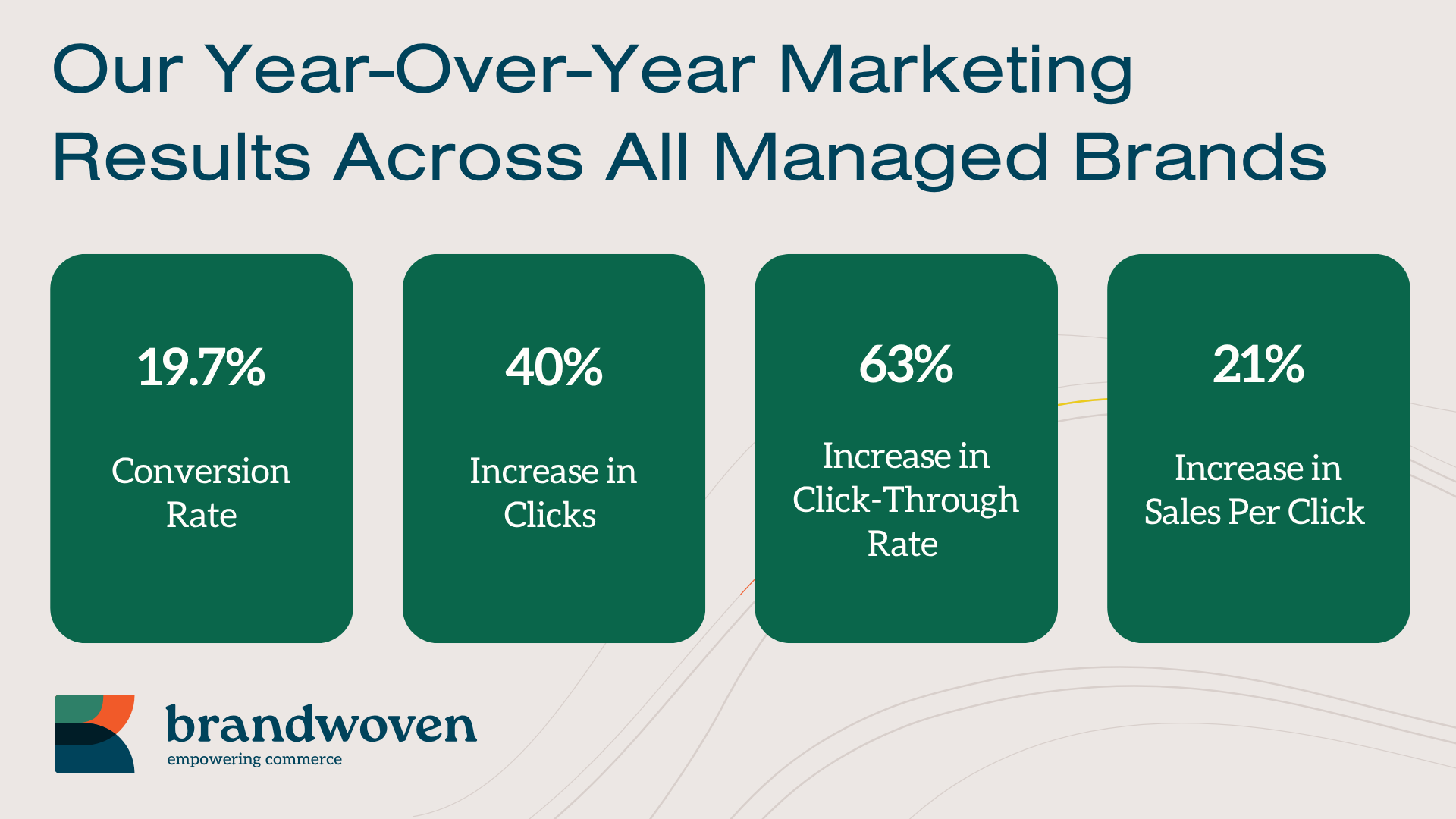
- Ad clicks +40% YoY
- Ad CTR +63% YoY
Mid & Lower Funnel: Traffic That Converted
We managed to improve efficiency even as cost-per-clicks rose because conversion strength more than offset it. That strength came from former quarters focused on retail-readiness work like content, imagery, and catalog hygiene. This foundation set our brands up to successfully meet December demand, importantly considering new factors that would influence shopper behavior such as Amazon’s Alexa for Shopping (formerly Rufus) chatbot.
Our December ‘25 conversion rate reached 19.7%, which was also a year-over-year improvement. We additionally saw sales per click grow 21% YoY across all of our managed brands.
The Outcome: Client Proof Points
We finished out December ‘25 with a 7.4 ROAS and 70% YoY increase in ad sales.
Our CPG brands have especially been seeing wins, despite higher competition, due to intense shopper demand and our focus on growing visibility within the audiences that matter most. In one case, a specialty tea brand saw 62% YoY sales growth. Seasonality was a contributing factor, as they exist within a giftable-category, but our team also spent the months leading up to Q4 preparing the brand’s Amazon catalog with extensive clean-up efforts alongside accurate inventory forecasting. These areas, compounded with our ad strategy, drew impressive growth for the Amazon brand.
Another example: A global baby products brand grew sales 19% YoY within the same December 2025 period. This proves as a steady-category counterpoint to the tea brand; peak-season lift isn’t only guaranteed for giftable products.
The Groundwork: What Our 2025 Output Looked Like
Throughout 2025, our agency produced:
- 650+ Amazon brand store assets
- 1,500+ A+ Content assets
- 16,500+ listing images
One outdoor gear client, a conglomerate of five brands that we manage on Amazon and Walmart, ran projects during 8 of the 12 months. Collectively, our projects included:
- 700+ listing bullet points rewritten
- 300+ new product titles
- 2,000+ ASINs loaded with A+ Content
- 230+ item errors fixed
- 2,000+ optimized images
This Amazon brand went into peak season with every box already checked. Our full cleanup gave them a system for success. This is the same point we reiterate with new brands, those with outdated content, or those who are launching new products: your foundation is everything. Poor copy, lack of or low-quality images, no positive reviews, and a high ad budget are not going to give you the numbers you’re looking for. But optimized copy, beautiful and educational imagery, and numerous positive reviews—combined with that same ad investment—can get you much farther. Success simply requires investing in the right areas and preparing in advance.
What Actually Determines Results
Does your Amazon brand’s ad strategy need updating this Q4? Here are some questions to help determine whether you need an overhaul before Amazon’s peak season arrives.
Brand-Side Variables
- Category Competitiveness & CPC Environment — The same budget buys very different visibility in supplements vs. niche outdoor gear. What does a click cost in your category, and is it rising?
- Brand Maturity — Review base, existing organic rank, and traffic history compound. A brand starting from strength grows differently than one starting cold. Do you have existing momentum or are you building from zero?
- Price Point & Margin Room — Advertising efficiency means little if margins can’t fund the investment phase, and peak fulfillment fee increases tighten this math further in Q4. Can your unit economics sustain spend long enough for the flywheel to turn?
- Seasonality & Giftability — Why a tea brand can post 62% December growth while a year-round staple posts a still-excellent 19%; both are wins but they’re different numbers, nonetheless. What does “good” look like for your demand curve?
- Willingness to Invest in Content AND Ads — The 2025 pattern was that compounded efforts will add up. Is your budget strategy treating both sides as an aligned system?
- Inventory Discipline — A December stockout is unrecoverable revenue; no ad strategy compensates for an empty shelf. Do you have enough units available for the peak season?
Agency-Side Variables: What Our Model Contributes
- 1:1 Client-to-Employee Ratio — Bandwidth for the unglamorous groundwork (like error fixes and catalog hygiene) which are easy to deprioritize at other agencies due to the complex and tedious steps required to get every listing truly retail-ready.
- Experience Depth — Team averaging 4+ years of marketplace experience and leadership averaging 7+ years, plus 10+ years on the brand side, means your goals get defined the way a brand defines them. We’ve been on both sides and understand the things you care about, outside of Amazon.
- Customized Approach — Unique success metrics set for every individual brand. For some, growth is the goal. For others, it’s price stability or brand presence. No matter what, we’ll guide you there.
- Full-Service Integration — Ads, merchandising, catalog, and logistics under one roof. Our funnel strategies work because no handoffs get dropped between them.
- Proof of Model, Not Just Outcomes — We take deep pride in our 3+ years average client retention rate, which is about 3x higher than our industry average. We work with brands across CPG and Sports & Outdoor categories, and know that each brand is different.
Our Amazon Q4 Playbook
Here are lessons we’ve learned and recommended actions your brand should take right now to guarantee successful performance this peak season.
1. Lock in Amazon Inventory & Budgets ASAP
Amazon’s inbound shipment deadlines are already set. You must have products in-stock to be able to sell them. This is priority #1.
For FBA brands, Amazon’s fulfillment centers prioritize Q4 receiving in September and October. The deeper into the year we get, the longer it will take for Amazon to receive, process, and make your inventory available to sell to customers. Additionally, capacity limits tighten and fees increase in Q4, making budgeting a key component to accurate forecasting.
We already know that CPCs rise in Q4. To protect efficiency, conversion readiness and targeting quality are more important than outspending competitors.
2. Refresh Creative Before the Rush, If Needed
In 2025, we saw conversion strength come from listings that were retail-ready before traffic arrived. Full PDP updates can take a whole (our average: 6 weeks for a complete overhaul). This means creative started in early fall is finished just in time for Black Friday. We do not recommend any new PDP content changes after mid-September. This cutoff gives you a safe window in case any issues during the overhaul process arise.
3. Trust the Foundation You’ve Already Built
We’ve seen time and time again that a strong foundation (proper catalog setup, strong content, high-quality products, and a consistent brand presence) are all necessary for your Q4 ad spend to truly pay off.
If you haven’t put in the foundational work to set your listings up for success, now is the time to do so. Similar to our guidance on creative assets, any catalog changes should not be made too close to the tentpole events. Right now, spend time auditing your listings to see if anything needs cleanup. If so, prioritize fixing them ASAP.
When Should Brands Start Preparing for Amazon’s Holiday Season?
Brands should start preparing for Amazon’s holiday season in Q3 at the latest. Since Amazon has already announced that Black Friday & Cyber Monday deal submissions close in October, around the same time as FBA inbound inventory deadlines, the earlier that brands plan, the better. We would not recommend making any big changes to your listings once the end of September rolls around.
Partner With Us
When brands ask us what makes Brandwoven different, we prefer to let the data do the talking.
It’s one thing to offer high-level advice, but we focus on both Amazon strategy and execution. We identify the core problem, build a plan to fix it, and actually execute the work needed to get there. And our results speak for themselves.
If you’re interested in learning more about our approach or what partnering with us might look like, book a no-obligation call with our team.