Article
What Our Brands Saw During Amazon Prime Big Deal Days 2026
Prime Big Deal Days (PBDD) returned on Tuesday, October 6 and Wednesday, October 7, 2026, keeping the same two-day format as last year. Walmart Deals also ran the week of October 5–11, and Target Circle Deal Days landed on the same two days as Amazon PBDD.
The event exceeded expectations and crushed last year’s event. US shoppers spent $9.86 billion online across retailers during the two days, up 8.5% from last year according to Adobe.
After preparing our brands for the event, we were eager to see how PBDD would play out – especially since Prime Day traffic was down this year. Keep reading to see the results, what we saw during and after the event week, and what all of this means for your Amazon BFCM (Black Friday and Cyber Monday) strategy.
How Our Brands Performed During Prime Big Deal Days 2026
To summarize our results, we’re sharing sales data from a large cohort of brands we manage. Some didn’t have comparable data from last year, so our YoY comparisons include only the brands that did.
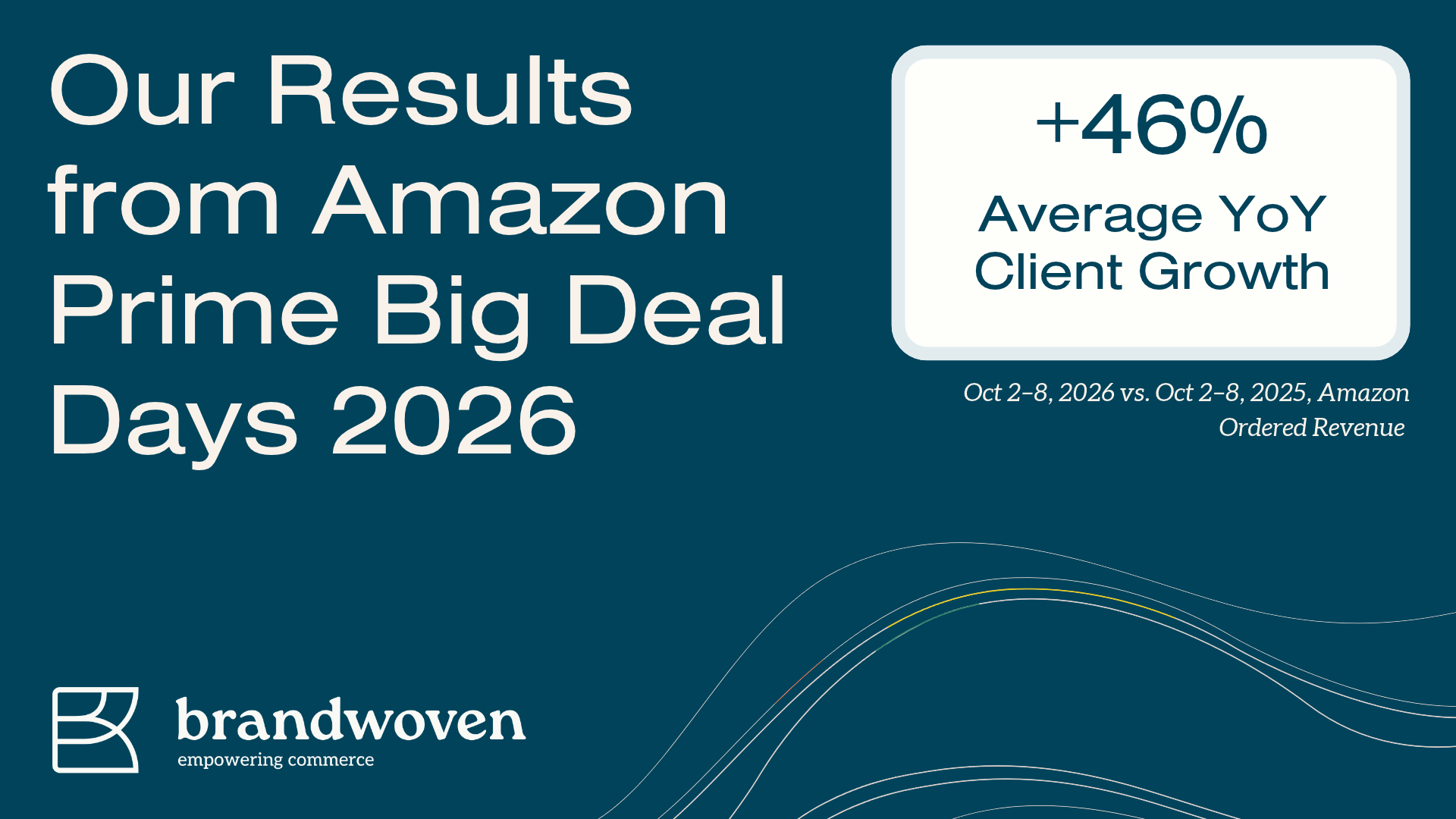
We compared each brand’s Amazon ordered revenue during the event week (October 2–8, 2026) with the same week last year – which also included PBDD.
Across brands with comparable YoY data:
- Sales grew an average of 46% YoY
- 13% of brands more than tripled their sales
- 67% of brands grew YoY
Compared with the week before the event, 72% of brands saw higher sales, with an average lift of 34%.
Selling Model Made a Difference
Two-thirds of these brands sell on Seller Central, where sales grew an average of 54% YoY. Our Vendor Central brands averaged +31% YoY.
CPG Categories Led in Sales Growth
Our CPG brands (food, pet, home, garden and kids) drove the strongest results with 89% growing YoY, averaging +84%.
These results match the wider market. Numerator’s PBDD tracking found that the event’s top sellers were essentials like protein shakes, disinfecting wipes, and toilet paper, and that 68% of items sold for under $20.
Did Sales Hold After the Event Finished?
A common worry with any big promotion is a post-event sales slump: shoppers stock up while products are discounted, then stop buying once prices return to normal. If that happens, the event didn’t create new sales; it simply moved purchases that would have happened anyway into the deal window alone. That’s why a strong event week, looked at on its own, can overstate sales results.
To see whether that happened this PBDD, we looked at the week after the event (October 9–15, 2026) for the same brands and compared it in two ways:
- With the same week last year, which also came right after PBDD
- With the week before this year’s event, our baseline for measuring both how much sales spiked during PBDD and where they settled once the event concluded
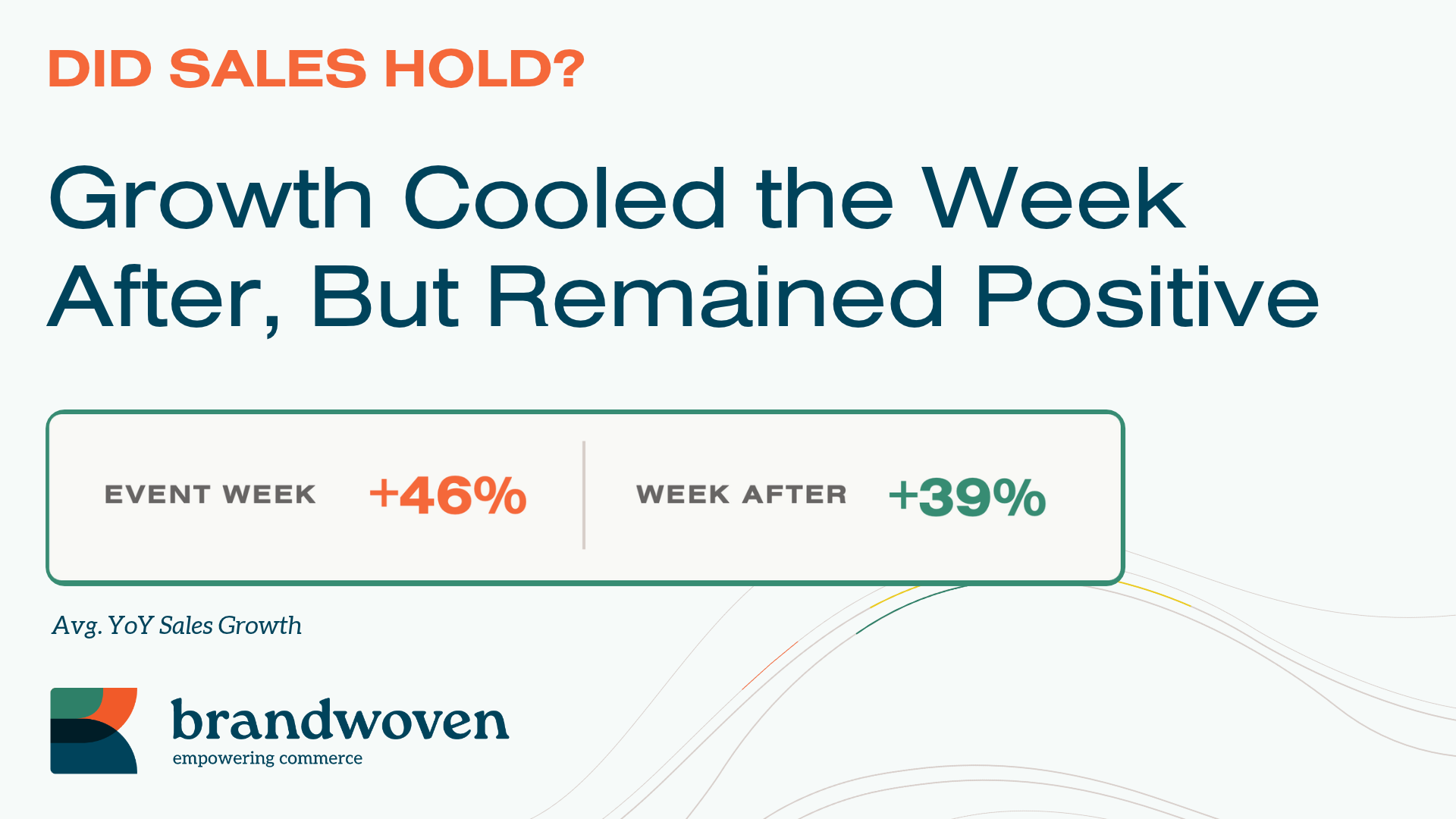
We found that growth over last year held, but sales settled back once the deals ended.
- The brand average was +39% in the week after, compared with +46% during event week.
- 60% of brands grew YoY in the week after PBDD, compared with 67% during event week.
- Compared with event week, 83% of brands were down the following week (expected once deals ended).
- Compared with the week before PBDD, a third of brands finished above their pre-event sales.
Category mattered here too:
- Food, pet, home, garden and kids brands came close to holding their pre-event sales, and their year-over-year growth in the week after stayed strong.
- Outdoor, sporting and apparel brands fell further compared with the week before PBDD.
The brands with the biggest swings had reasons that had little to do with the event itself:
- Seasonality: A participating summer watersports brand was out of season.
- Inventory: A garden brand grew 47% YoY during PBDD week, but demand ran ahead of its inventory, and sales fell sharply after the event concluded. It was the brand’s first PBDD with us, so we’re proud of their performance and are adjusting forecasts for holiday to meet higher-than-expected demand on the marketplace.
- Product transitions: An outdoor apparel brand was selling through its product assortment in preparation for new launches in early 2027, which pushed its post-event sales well above last year’s.
The takeaway: momentum after an event depends on what happens behind the scenes. Plan inventory for the days after an event, not just the event itself.
Short Window, Faster Shoppers
With only two days to shop, buyers didn’t wait. Most of the action happened early in the event:
- Across many of our CPG brands, Day 2 sales ran 25–30% below Day 1 on average.
- Pacvue’s data showed the same pattern across Amazon advertisers. Day 1 beat Day 2 on return on ad spend (ROAS) and conversion rate for both Sponsored Products and Sponsored Brands.
- Triple Whale’s benchmarks from roughly 1,900 brands showed the same drop-off: ad-attributed sales fell 24% from Day 1 to Day 2, and ROAS fell 13%.
- Day 2 brought in more new customers. Pacvue saw the new-to-brand share of Amazon DSP sales rise from 42% on Day 1 to 46% on Day 2, suggesting later shoppers were more open to trying new brands.
- One supplement brand we manage saw its daily PBDD sales run 55% higher than its daily average during June’s four-day Prime Day. Both PBDD days beat its best Prime Day.
Prime Big Deal Days vs. Prime Day 2026 Results
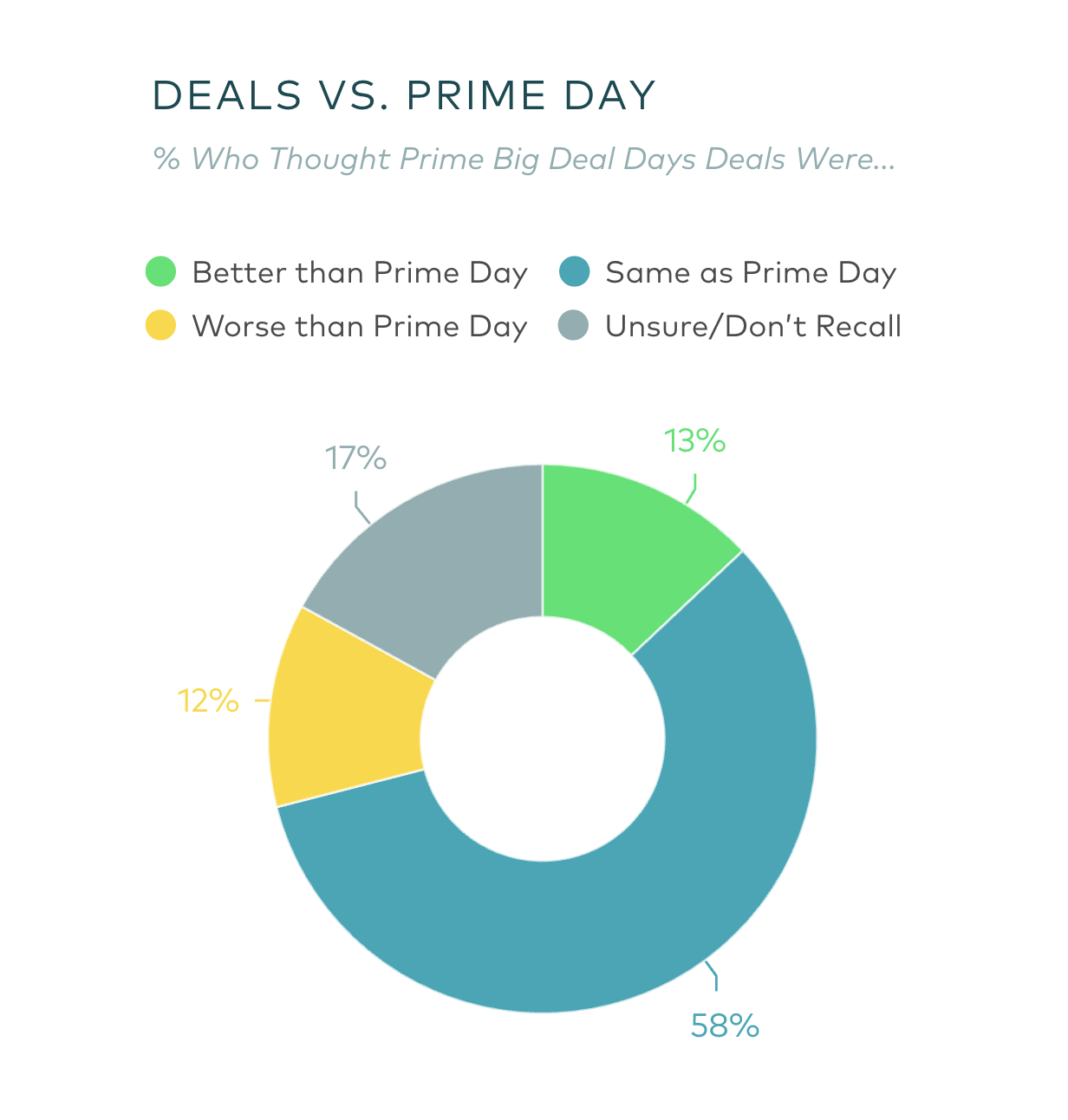
Shoppers also spent nearly as much as Prime Day, but in half the time. According to Numerator, the average household spent $114.01 during PBDD, compared with $121.96 during Prime Day. Across the full market, though, the four-day Prime Day still brought in more total online spending: $26.4 billion, per Adobe, compared with $9.86 billion during PBDD. That’s likely for two reasons:
- Prime Day is still Amazon’s best-known tentpole event, so it draws more shoppers overall.
- Even when Day 1 is the strongest, shoppers keep buying throughout a longer event. Adobe’s Prime Day forecast expected about 59% of spending in the first two days, leaving a meaningful share for days three and four.
In short, households spent more per day during PBDD, but Prime Day’s bigger audience and longer window added up to more total sales.
Walmart and Target Ran Competing Deal Events
Amazon’s competitors took opposite approaches to event length this October.
Target Circle Deal Days Went Shorter
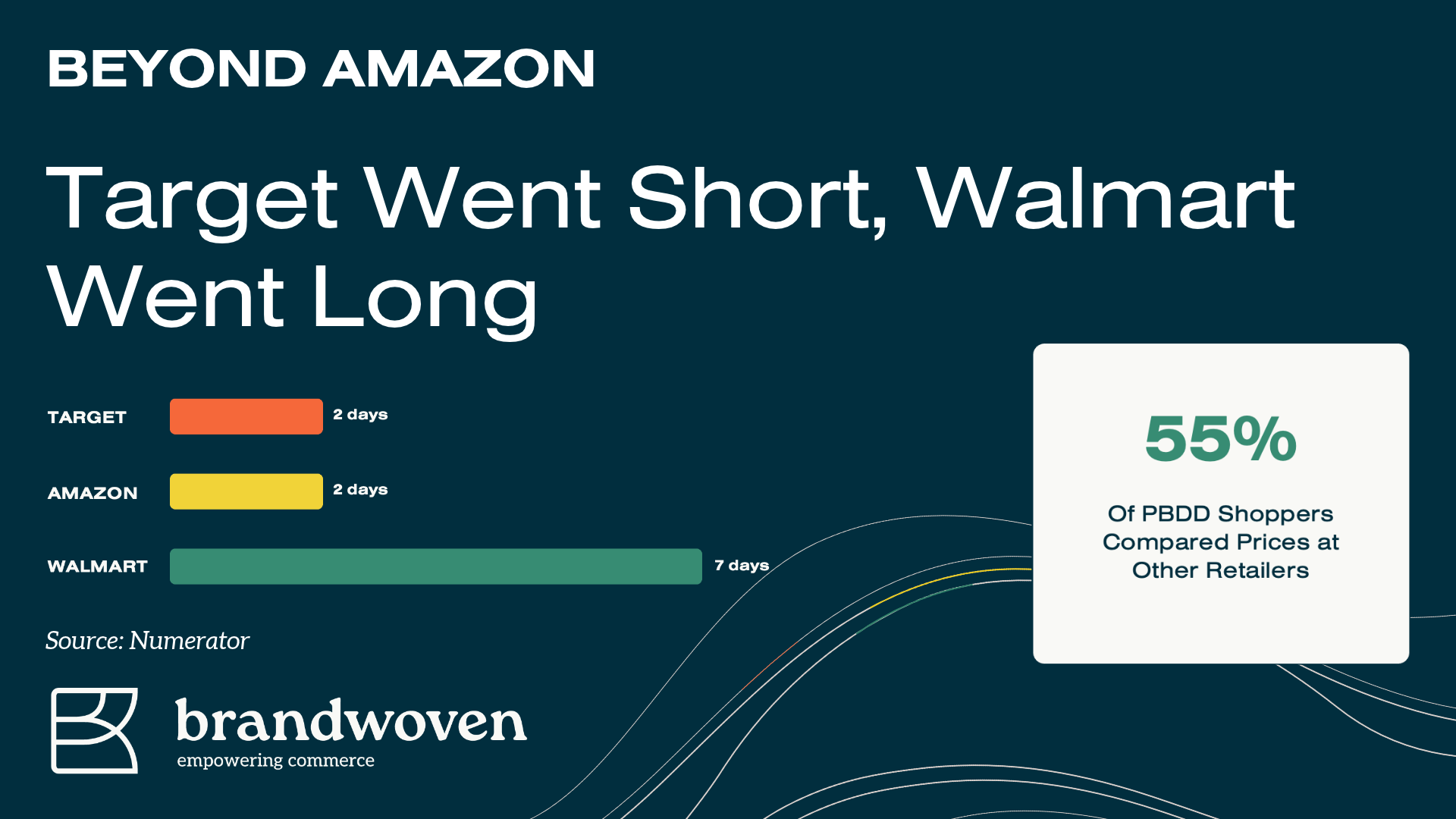
Target Circle Deal Days ran just two days, October 6–7 (the exact same days as PBDD). Last October, Target ran Circle Week, a seven-day event from October 5–11, 2025. Earlier this year, Target described concentrating its Circle events into fewer “high-impact days” which matches the success we’ve seen with a shorter PBDD window.
Walmart Deals Went Longer
Walmart Deals ran seven days this year, up from six days last year.
Pacvue found Walmart’s Sponsored Products return on ad spend held steady across the five days it tracked. The ad tech provider’s read is that shoppers became more responsive to Walmart’s ads once the Amazon and Target events ended.
Shoppers Compared Prices Across Marketplaces
Numerator found that:
- 55% of PBDD shoppers compared prices at other retailers before buying, most often at Walmart (66%) and Target (40%)
- 33% of PBDD shoppers also shopped (or planned to shop) Walmart Deals, and 24% did the same for Target Circle Deal Days.
What to Expect for Amazon BFCM This Year
PBDD was a preview of the Amazon tentpole events still to come, in a holiday season that’s starting earlier and running longer.
Holiday Deals Start Weeks Before Black Friday
This year, Amazon’s BFCM event will run from Thursday, November 19 through (Cyber) Monday, November 30.
Other retailers are starting even earlier. Target is running a new Deal of the Day from November 1 through December 24. TikTok Shop’s BFCM event runs November 11–30, after the platform reported more than $500 million in sales over last year’s BFCM weekend.
Spending Is Expected to Grow, Partly Because of Higher Prices
The NRF forecasts November and December 2026 retail sales will rise 4.2% to a record $1.013 trillion, noting that price inflation is part of that growth. Adobe expects $275.1 billion in US online spending over the same period, up 6.7% YoY. That includes $47.5 billion during Cyber Week and a record $15.1 billion on Cyber Monday alone.
Essentials Will Stay in Demand, and Cost More to Advertise
Adobe expects shoppers to keep using holiday sales to stock up on essentials like household cleaning and personal hygiene products. That matches what we saw during PBDD, when our CPG brands led in growth.
This increased demand also means increased competition. During PBDD, Health & Household had the highest cost per click of any category Pacvue tracked, at $2.39. For BFCM, brands selling everyday essentials should expect pricier ad auctions through EOY.
Shoppers Are Value-Focused, and Some Holiday Buying Has Already Happened
Most of Target’s new holiday gifts are priced at $20 or under, echoing PBDD’s under-$20 baskets. Some holiday shopping is also already done: Numerator found that 20% of PBDD shoppers bought holiday gifts, and 18% of those finished more than half their gift shopping already.
How to Plan Your BFCM Strategy
- Win the first day. PBDD and Prime Day both showed that shoppers move fastest at the start. Put budget, inventory, and your strongest offers behind the opening of each Amazon tentpole event.
- Manage your budget and margins across the season. With deals running from early November through Christmas, build flexibility into your budget. A Health & Household brand, for example, may need to spend more than planned to keep traffic flowing as clicks get more expensive. Shift spend toward the events and products that are converting, but set a ceiling so you don’t go over. Then track the margin on each offer after discounts, Amazon fees and ad costs, so every event still earns a profit.
- Plan for the days after, not just the event. Selling out during an event can leave you short on inventory when shoppers are still buying. Our guide to Q4 demand planning walks through how to forecast inventory and capacity so you’re covered through the days and weeks after each event.
- Tailor offers by marketplace. Shoppers are comparing prices across retailers, so split discounts by marketplace to drive interested traffic to each one.